Patlytics Releases Key Updates to Invalidity Contention Chart Functionality






















For validity/invalidity analysis, Patlytics has been building toward a single goal: an end-to-end workflow — from subject patent review and prior art search to contention charts (anticipation, obviousness, motivation to combine) and disclosure analysis (written description, enablement, indefiniteness) — for any phase of diligence or active litigation.
Today's release brings us significantly closer to that vision, with multiple critical updates to the contention chart functionality of the Invalidity module. Patlytics now includes, among other things:
- Patent and NPL prior art search across 130M+ patents and 250M+ NPL references
- Prior art qualification analysis
- Priority date analysis
- Citation-backed claim charting on a limitation-by-limitation basis in view of iterable claim construction
- Automatically generated and editable claim construction
- Citation engine for US and OUS references and jump-to-citation linking
- AI chat across claim chart analysis
- Prosecution history agent to analyze complex file wrappers for disclaimer or estoppel
- Creating combinations of prior art references with reference-level and limitation-level motivations to combine
- Standard or Exhaustive charting depending on the persona
- Analysis of terms and phrases for written description, enablement, indefiniteness, means-plus-function, claim dependency
- Batch creation of contention charts based on customizable templates
When a company is accused of patent infringement, a critical defense is to challenge the validity of the asserted patent. For example, if the claimed invention was already disclosed or suggested by "prior art" - earlier patents, products, academic publications, or public disclosures - then the patent may be invalid and therefore not infringed.
Showing invalidity in a patent infringement proceeding involves charting prior art to the asserted patent and in US district court or USITC proceedings, preparing and serving invalidity contentions including hundreds or thousands of pages of contention charts, depending on the number of asserted patents. But their preparation is often a big endeavor during tight deadlines.
- Time consuming. A patent infringement case may involve multiple asserted patents and dozens of asserted claims, requiring multiple prior art references across different languages, jurisdictions, and formats - each one needing to be read, analyzed, and mapped to each limitation of each asserted claim. They can take weeks of time from a team of attorneys and paralegals, with any single attorney easily spending at least 40 to 80 hours on the charting process alone.
- Voluminous, but require completeness, accuracy, and precision. Patent attorneys are pulling disclosures and other data from a mix of formats, then assembling it into a structured chart. Publication dates, inventor names, patent IDs, and other bibliographic data are all required for prior art qualification. Moreover, each relevant disclosure from the prior art reference including pincites are required for full and complete disclosure in order to prevent preclusion .
- Similar, yet different, across law firms and their clients. While charts are similar in that their purpose is to show how prior art maps to claims, varying law firms (and their clients) have different templates for how contention charts must be structured, styled, and written. Some require specific preamble language. Some dictate how dependent claims are introduced. Some need headers, footers, and custom disclaimers. Some include pages of specific boilerplate language for prior art, disclaimers, and reservation of rights before the chart even begins. Assembling all of this from scratch (or applying last-minute changes across dozens of voluminous charts) adds hours of mechanical work.
The result? An enormous portion of attorney time is spent on mechanical document assembly rather than legal strategy.
Introducing Patlytics’ most comprehensive contention chart release to date
This release closes the gap between prior art search and finished litigation work product, giving IP teams a faster, more accurate path from analysis to service-ready document.
With these updates, patent litigation teams can, among other things …
- Generate contention charts that match your firm's exact template format without post-export reformatting, including preamble, claim blocks, headers, footers, and disclaimer language.
- Verify every citation against the source PDF before it goes into a legal document, directly within the platform.
- Embed patent figures from prior art PDFs natively into your charts, with full control over selection, placement, and sizing.
- Generate up to 8 contention charts at once from a shared configuration, with template, defendant, and evidence category applied across the batch.
Breaking down what’s new
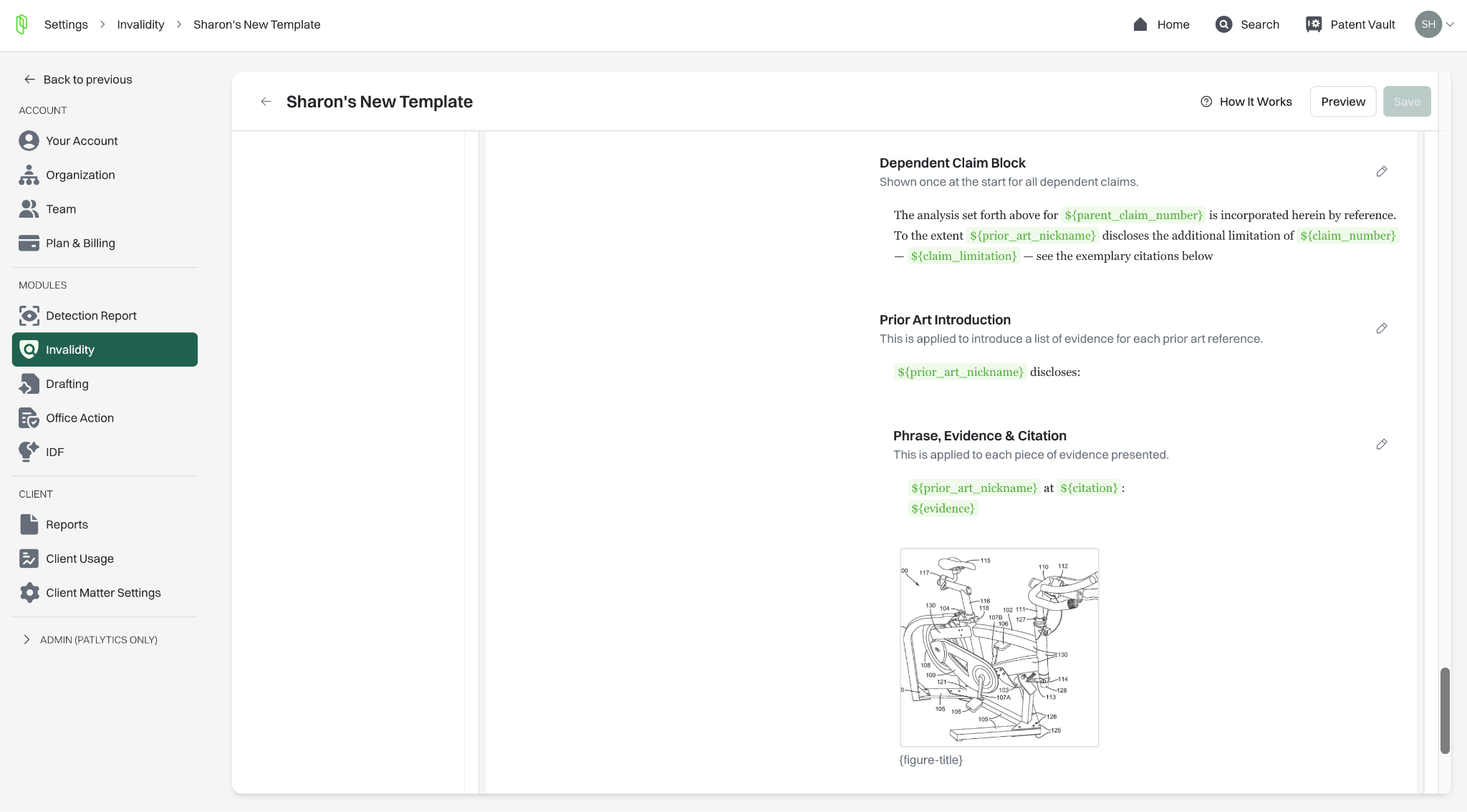
1. Templates That Match How Law Firms Actually Work. Templates now support the full range of document-level customization attorneys need: title, download file name, header, footer, and font styles. Disclaimer language is consolidated into a single merged field. At the claim level, templates now support preamble blocks, dependent claim blocks, and closing blocks - giving firms full control over how each section opens and closes. They can also preview template changes before saving, to catch formatting issues before generating a full chart.
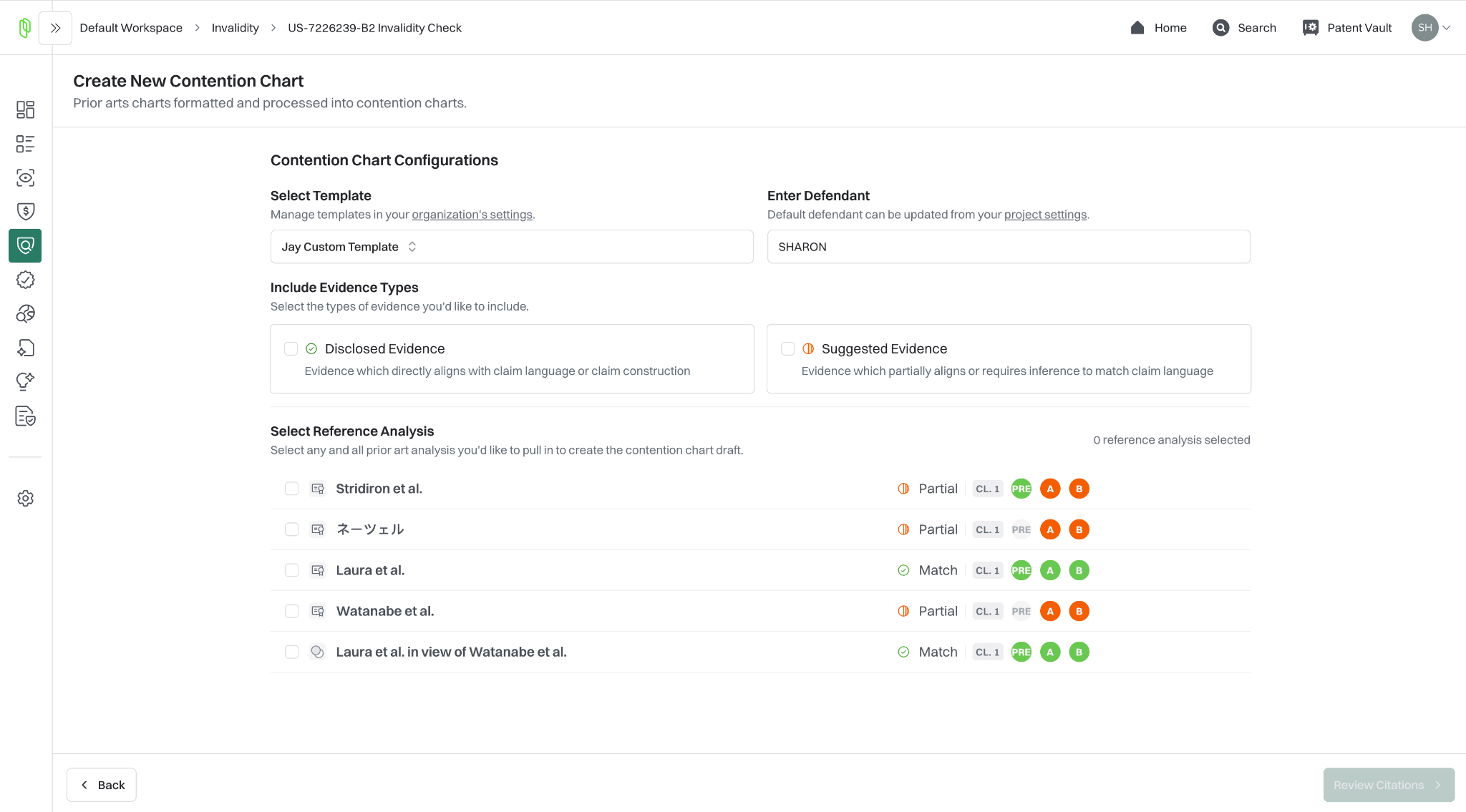
2. Smarter Reference Selection. The chart creation interface now displays read strength (Match or Partial) for each prior art reference at the moment of selection. Attorneys can make strategic inclusion decisions upfront rather than discovering coverage gaps after the fact. The system also detects whether a reference has already been used in another contention chart, flagging potential duplication before it becomes a problem in multi-patent cases.
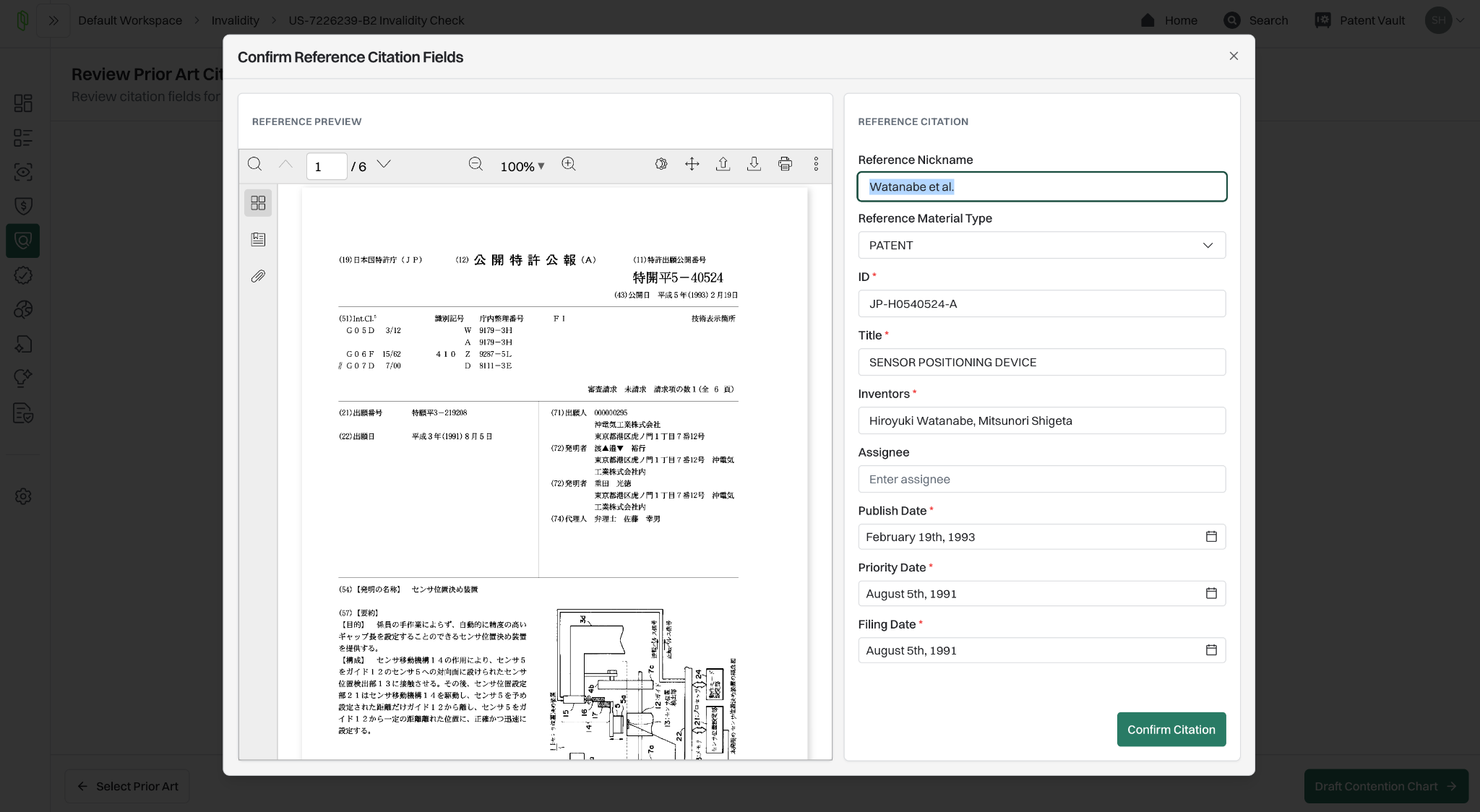
3. Citation Verification Against the Source PDF. Every prior art reference can now be reviewed directly in the chart creation flow, with the source PDF open alongside editable citation metadata. Patent professionals can preview the patent document inline, click any reference field within the document to open it in the right panel for editing, and re-sync updated values back onto the document so citations and source stay aligned. Inventor names, publication dates, patent IDs, and jurisdiction codes can all be verified against the actual document before anything goes into a legal filing - a critical quality-control layer, especially for international references where date errors can affect prior art eligibility entirely.
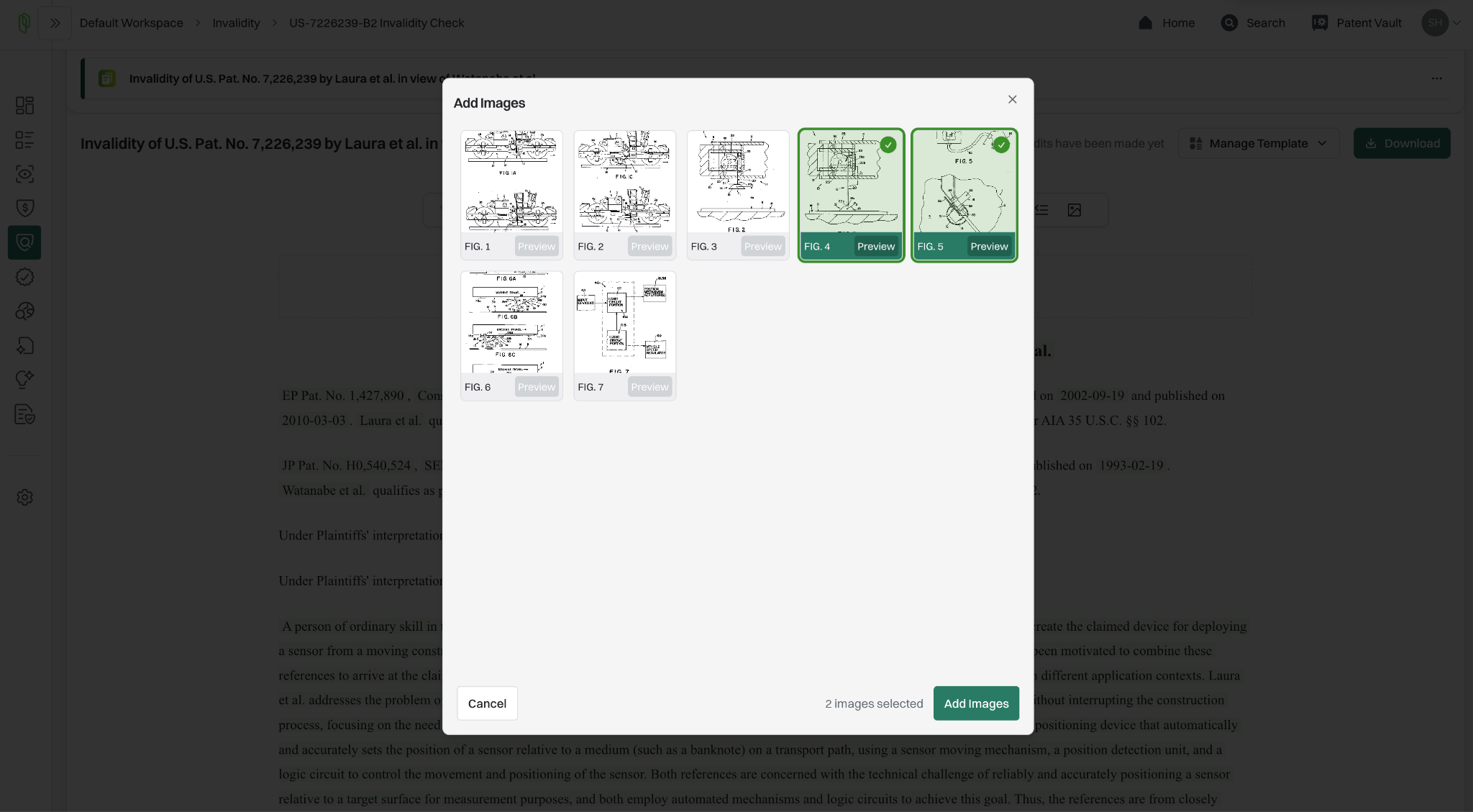
4. Native Image Support. Patent figures can now be selected by figure number directly from prior art PDFs and embedded into contention charts without leaving the Patlytics platform. Images in evidence citations are pulled in automatically by default, with full support for adding, removing, and resizing. What previously required manual screenshotting, cropping, and Word document assembly is now a native part of the charting workflow.
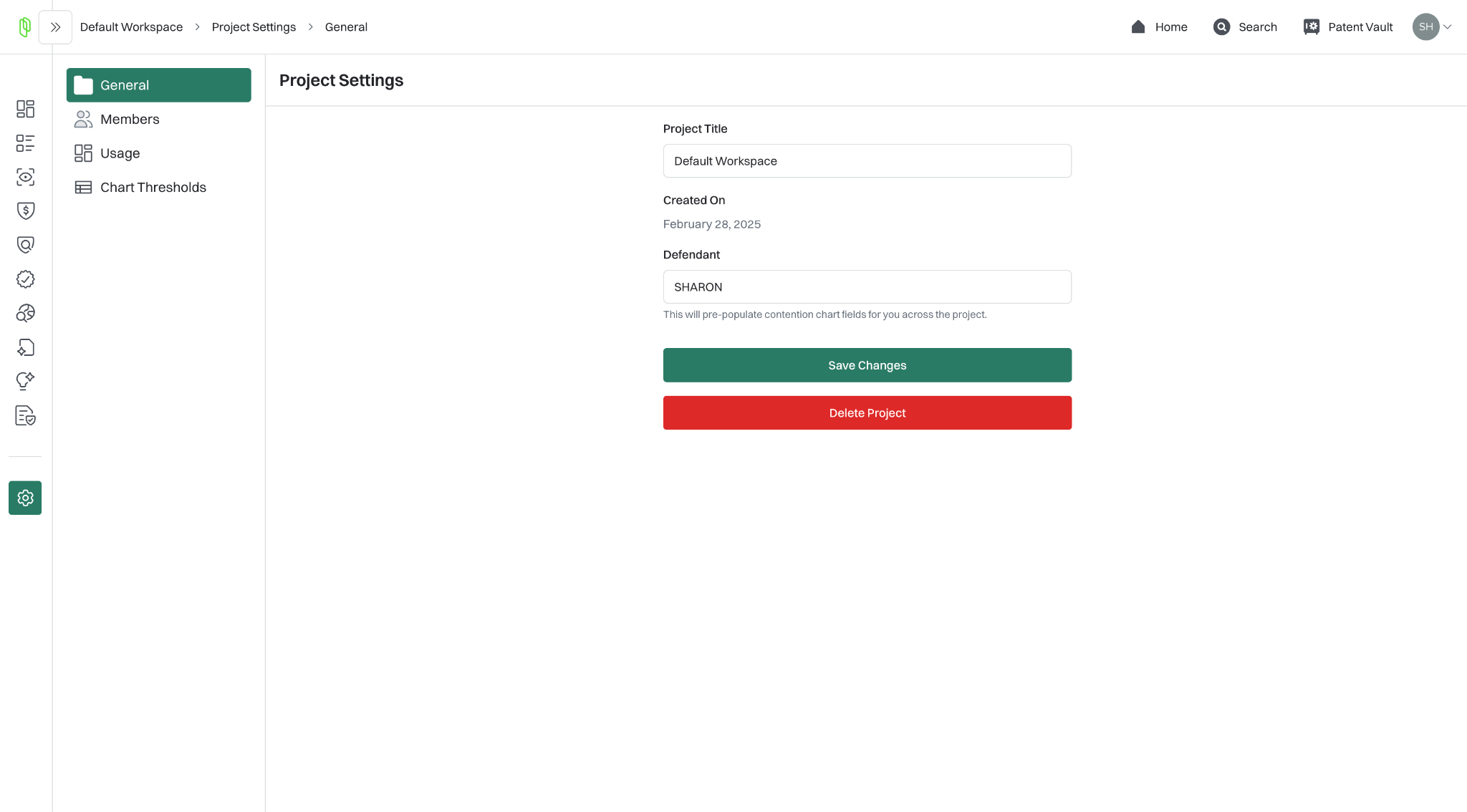
5. Project-Level Defendant Settings. The defendant name can now be set at the project level and pre-populated across all charts in that project. In large litigation cases with multiple patents and dozens of charts, this eliminates a repeated manual step and reduces the risk of inconsistency across filings.
6. Batch Chart Generation. Attorneys can queue up to 8 charts from a single configuration and generate them in one pass. A shared config row sets the template, defendant, and evidence category across every chart in the batch. The queue panel groups entries, flags duplicates before generation, and supports quick removal. Charts generate sequentially with live placeholder spinners in the chart list, and the first completed chart auto-selects so review can start while the rest run. Reports are capped at 100 charts, enforced at generation time.

What comes next
This release is one step in a larger build. Soon, Patlytics will also introduce subject matter eligibility analysis, essentially completing our full product suite for invalidity/validity work.
The goal has always been a single, end-to-end workflow: from prior art search through finished litigation work product. Today's release gets us meaningfully closer.
To try these updates for yourself, request a demo today.
The Premier AI-Powered
Patent Platform
Reduce cycle times. Increase margins. Deliver winning IP outcomes.