最佳專利撰寫 DeepIP 替代方案(按工作流程、準確度與自動化程度比較)
June 9, 2026

AI 工具正在重塑專利團隊撰寫、審閱及管理申請案的方式,而 DeepIP 等平台已成為這波轉變的一部分。然而,許多團隊現在需要的已不僅僅是基於提示詞(prompt-based)的撰寫功能,這也是他們積極尋找能支援完整專利工作流程的 DeepIP 替代方案的原因。根據 湯森路透 (Thomson Reuters)的數據顯示,AI 現今每週可為律師節省 4 小時,五年內更可提升至每週 12 小時。這種額外釋放出的產能,正推動各團隊採用不僅能生成文字,更能實質推進工作進度的工具。
本指南根據工作流程覆蓋範圍、輸出準確度及自動化深度,比較了市面上最優秀的 DeepIP 替代方案。同時也說明了 DeepIP 的不足之處,以及若您需要一套更完整的 專利分析工具時,該注意哪些重點。
別再為了重建專利背景資訊而在各個斷裂的工具間來回切換。 了解 Patlytics 如何將撰寫、審查、權利要求分析、侵權分析、FTO(自由實施)及專利組合管理等工作流程,整合在同一個 AI 原生專利平台中。
重點摘要:
- DeepIP 專注於撰寫與審查,但許多團隊需要的是能支援完整專利生命週期的工具
- 端到端平台能減少工具切換,並確保各工作流程間的洞察資訊保持連貫
- 評估 DeepIP 替代方案的團隊應優先考量工作流程覆蓋率、可追溯性及整合能力
什麼是 DeepIP?
DeepIP 是一個專為專利從業人員設計的 AI 平台,支援撰寫、審閱及審查任務。它透過基於提示詞的工作流程,協助生成申請案內容、分析先前技術並準備審查意見通知書的答覆。
該平台與 Microsoft Word 及 IP 管理系統等工具整合,讓律師能在熟悉的撰寫環境中工作。它同時支援權利要求生成、修正建議、具引文支持的分析、專利性評估、無效性分析以及專利組合層級的洞察。
團隊為何可能需要比 DeepIP 更強大的功能(基於真實用戶回饋)
DeepIP 在市場上已獲得實質的採用,但深入測試過的從業人員也指出了幾個反覆出現的痛點,在決定採用前值得深入了解。
Word 以外的工作流程碎片化
根據專利律師 Tim Bright 的 2025 實測評論,Word 外掛程式並不支援 OA 模組的完整功能,導致使用者必須在 Word 與網頁應用程式之間來回切換才能完成單一任務。Bright 指出,這種不斷切換的過程「中斷了工作流程」,也抵銷了該工具所承諾的效率提升。
輸出品質極度依賴提示詞技巧
A 2026 年 Patentext 評比 研究發現,DeepIP 的提示詞驅動介面所產出的結果,會因提問方式的不同而有顯著差異。一位 DeepIP 使用者在 DeepIP 主辦的網路研討會中直言:「這就像擁有一群實習生。如果你問實習生一個非常模糊的問題,你很可能會得到一個失焦的回答,甚至是一堆廢話。」
高昂定價對小型事務所造成負擔
DeepIP 採用客製化的授權定價模式,並未公開費率。根據 2025 年 Waves & Algorithms 的市場研究,估計每位使用者每月費用約為 200 至 500 美元。中大型事務所或許能負擔,但對於個人執業者及小型精品專利事務所而言,這引發了關於投資報酬率的實際疑慮。
輔助撰寫,而非自動化撰寫
DeepIP 能加速撰寫流程,但無法取代律師的專業判斷,特別是在需要更多人工審核的生物技術與製藥專利申請案中。在一項針對 135 位專利專業人士的即時民調中,於 DeepIP 與 IPWatchdog 共同舉辦的座談會期間,45% 的受訪者仍將專利準備與審查視為他們工作流程中最大的挑戰。
缺乏端到端的生命週期覆蓋
A 2026 年 Patentext 並列比較 指出 DeepIP 涵蓋了撰寫與審查功能,但缺乏侵權分析、無效性分析、權利要求對照表(claim charting)及專利組合管理功能。若團隊需要一個能涵蓋完整專利生命週期的單一平台,則必須額外搭配其他工具。
從發明揭露到侵權偵測,從撰寫到無效性分析, 體驗單一 AI 平台如何實現端到端的全生命週期管理。
選擇 DeepIP 替代方案時應考量的關鍵功能
合適的 DeepIP 替代方案不應僅限於生成草稿。它必須能串聯檢索、撰寫、分析與專利組合管理工作流程,讓團隊無需在不同工具間重複作業。
請留意:
- 具備引用來源的產出: 分析報告、草稿與圖表應連結至原始資料,以便律師能驗證每一項建議。
- 請求項層級映射: 平台應將請求項限制條件映射至先前技術、產品、說明書與佐證資料,而不僅僅是提供排序後的搜尋結果。
- 整合式請求項對照表: 請求項對照表應直接連結至侵權、無效性、自由實施(FTO)與授權工作流程。
- 串聯式審查工作流程: 審查意見通知書(Office Action)分析應連結至請求項、引證案、撰寫歷程與答辯策略。
- 專利組合情報: 平台應支援分類、汰除、專利與產品映射,以及專利組合層級的決策分析。
- 企業級安全性: SOC 2 Type 2 與 ISO 27001 應為基本要求;ISO 42001 正逐漸成為 AI 管理的業界標準。
- 具名實證: 優先選擇您所屬產業中已有企業採用的平台,而不僅僅是參考匿名推薦。
DeepIP 的最佳替代方案
DeepIP 涵蓋了部分專利撰寫與審查流程,但許多團隊需要功能更廣泛的工具,而不僅限於文件處理。此清單包含支援專利生命週期各個階段的平台,從撰寫與前案檢索,到權利要求對照表製作與專利組合管理,應有盡有。
我們根據工作流程覆蓋範圍、輸出結構以及各工具對實際專利任務的支援程度,篩選出這些 DeepIP 的替代方案。評估標準包括撰寫支援、前案整合、審查意見通知書處理,以及跨專利生命週期連結洞察的能力。
1. Patlytics:最適合需要端到端專利情報與分析的法律事務所及企業內部團隊
Patlytics 是一款 AI 原生專利平台,專為需要超越單純撰寫輔助的團隊所打造。它將發明揭露、申請案撰寫、審查意見分析、前案審查、權利要求對照、無效性分析、侵權分析、FTO(自由實施)、專利汰除及組合管理整合於單一系統中。
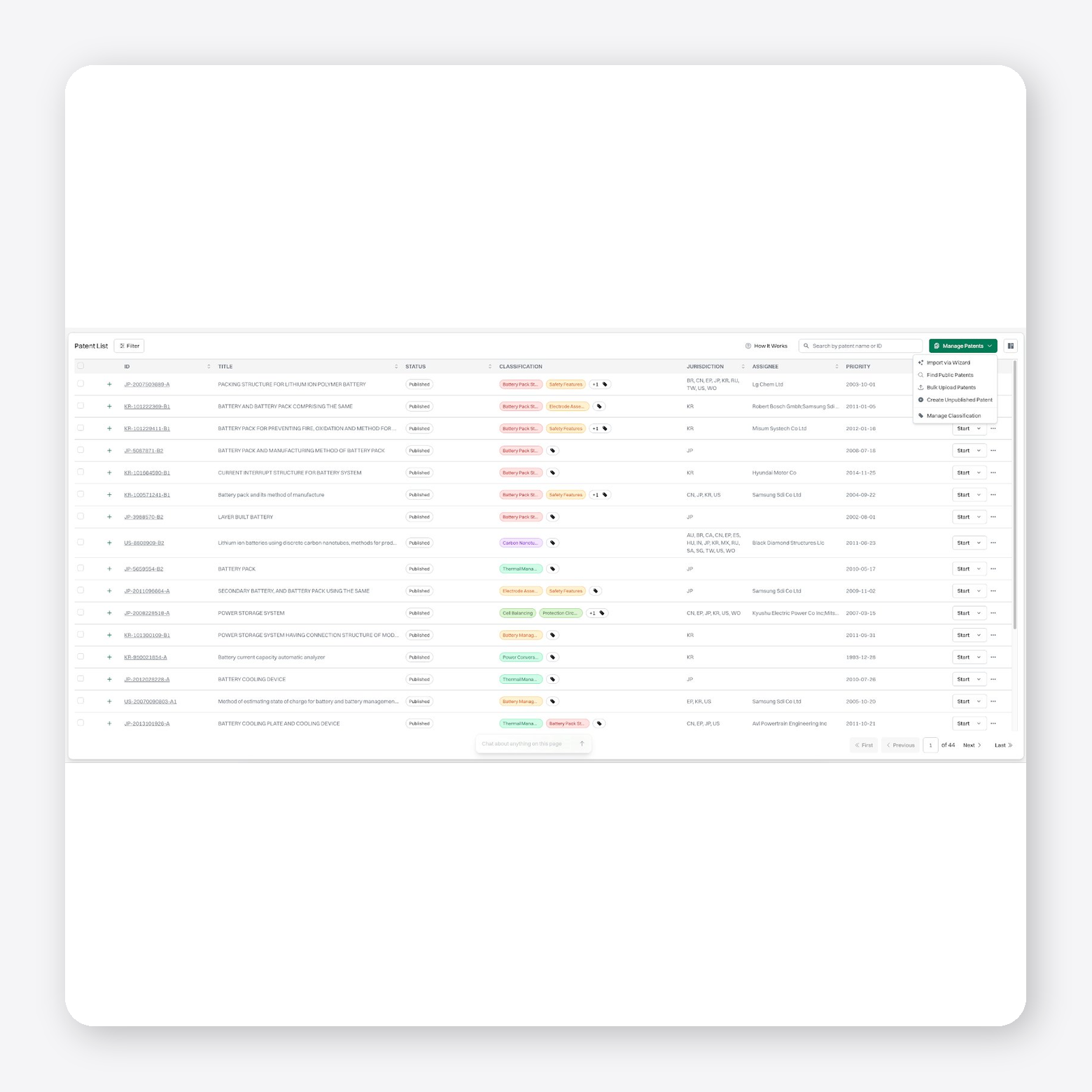
該平台以可驗證的輸出為核心設計。專利律師可以生成草稿、將權利要求對應至證據、分析專利性或無效性,並製作具備來源連結支援的逐項權利要求對照表。這為團隊提供了可審查的基礎,而非零散的 AI 生成文字。Patlytics 還能將審查與撰寫工作與後續的專利組合及執行決策連結起來。團隊可以對專利進行分類、識別汰除候選對象、將專利對應至產品,並在不同工作流程間傳遞洞察,無需在不同工具中重複進行分析。
主要功能:
- 專利申請案撰寫: 支援根據技術文件、圖式及發明揭露書等原始資料進行 AI 輔助撰寫
- 審查意見通知書分析與答辯: 透過分析審查意見通知書、識別答辯策略,並草擬修正案與論點,進而生成結構化的答辯內容
- 侵權偵測: 利用結構化權利要求對照表,識別潛在侵權行為並將權利要求對應至產品功能
- 權利要求對照表生成: 建立逐項對應的權利要求對照表,並連結相關佐證資料
- 專利精簡: 協助識別資產價值高低,以支援專利組合的優先順序排序與決策制定
- 安全性與合規性: 符合 SOC 2 Type 2、ISO 27001、ISO 42001 及 GDPR 要求,並採用加密與隔離的資料處理方式
與 DeepIP 的差異:
Patlytics 將撰寫、分析與專利組合工作流程整合於單一平台,而 DeepIP 則更側重於文件環境下的撰寫與審查任務。Patlytics 內建專利組合管理與權利要求層級的智慧分析功能,減少了在整個專利生命週期中對多種獨立工具的需求。
使用者見證:
「Patlytics 易於使用且好上手,能協助我們的團隊發現平時容易忽略的問題。Patlytics 團隊與客戶服務表現卓越,讓我們對這款攸關公司獲利的產品充滿信心。我們每天都會使用它,而且對於它能如此輕鬆地整合進我們的工作流程感到驚訝。」- G2 使用者
2. ClaimMaster:最適合自動化專利校對

ClaimMaster 是一款 Microsoft Word 外掛程式,專為專利校對、撰寫支援與文件自動化而設計。它專注於利用符合專利撰寫標準的規則檢查,來識別權利要求、說明書與圖式中的錯誤。ClaimMaster 還包含生成撰寫章節、分析審查意見通知書以及從公開來源下載專利資料的工具,所有功能皆在文件工作流程中完成。
主要功能:
- Patent proofreading: Detects claim errors, antecedent basis issues, incorrect dependencies, and inconsistencies using customizable rules
- Specification and figure review: Checks part numbers, acronyms, formatting issues, and missing descriptions across specifications and drawings
- Patent drafting support: Generates document sections, figures, and descriptions using templates and optional AI tools

How it differs from DeepIP:
ClaimMaster focuses on document-level proofreading and drafting support within Microsoft Word, while DeepIP applies AI across drafting and prosecution tasks with more emphasis on generating and iterating on content.
User testimonial:
“I haven't run into any things that I dislike. They periodically send updates which fix issues usually caused by changes at the USPTO. I wish it would allow 2 users per subscription so my paralegal can do some of the tasks without me having to buy her own subscription.” User review
3. Edge: Inventors and Corporate R&D Teams Who Need Help Producing Clearer Disclosures
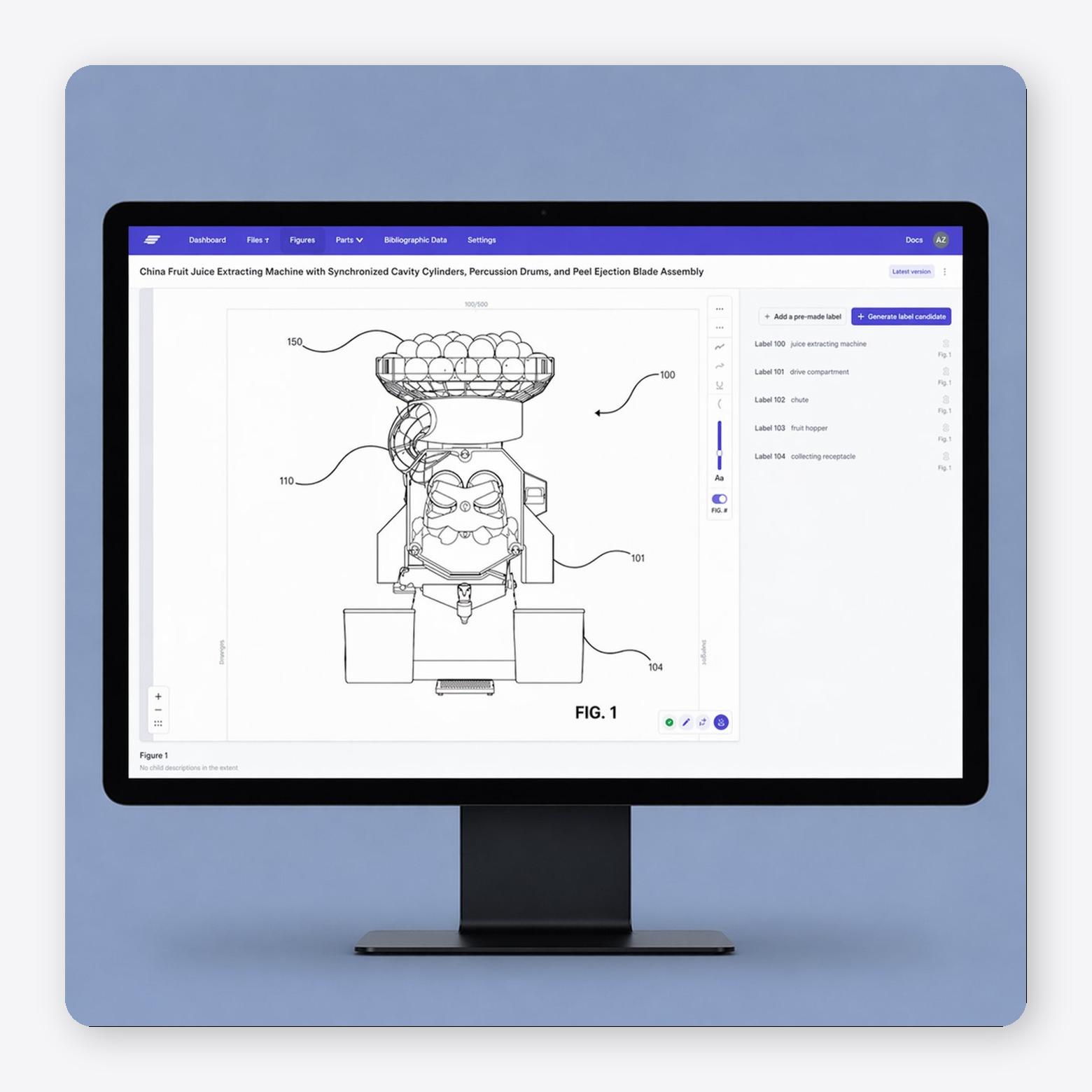
Edge is an AI platform focused on patent drafting and invention disclosure workflows, with additional support for trademark search. Its patent drafting module, Ingenia, supports claims, specifications, figures, and disclosures within a single interface. Edge is designed around task-based workflows, where users input inventor materials and generate structured patent content, with support for regional requirements such as USPTO and EPO standards.
Key features:
- Patent drafting: Supports AI-assisted drafting of claims and specifications based on inventor inputs
- Figure generation and editing: Creates and edits patent figures, including flowcharts and line drawings, with synchronized elements
- Invention disclosure intake: Processes inventor materials and structures them into formal disclosures
How it differs from DeepIP:
Edge focuses on structured drafting and disclosure workflows with integrated figure handling and regional support, while DeepIP emphasizes iterative drafting, analysis, and prosecution.
User testimonial: Not publicly available
4. IP Author: Best for Patent Practitioners and IP Departments Handling High‑Volume Filings
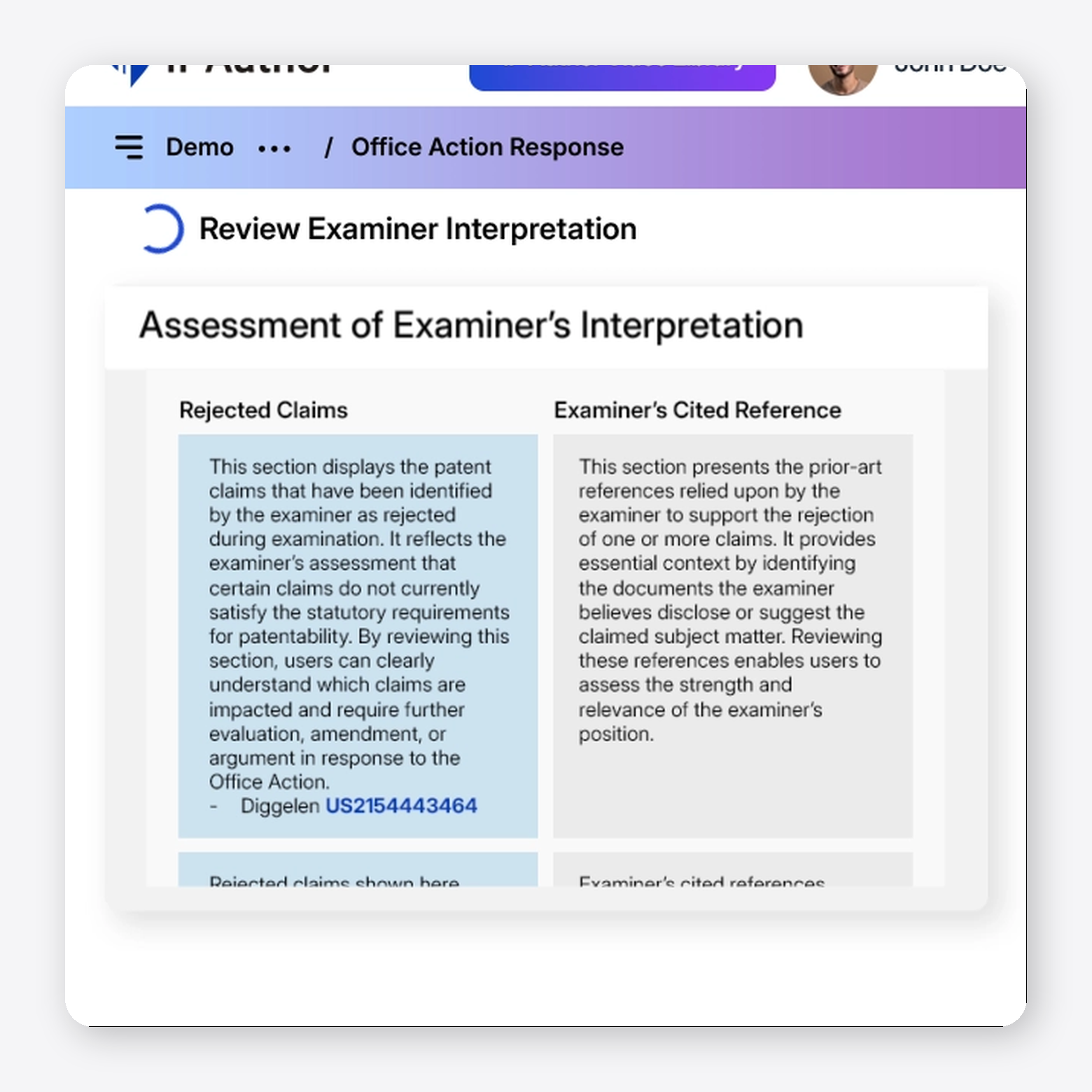
IP Author is an AI platform that supports patent drafting, prior art search, and office action responses within a single system. It structures patent applications from invention disclosures, maps prior art to claims, and generates response strategies based on examiner feedback and prosecution history. The platform also includes similarity scoring, global search across patent and non-patent literature, and tools for managing drafting consistency across claims, figures, and technical content.
Key features:
- Patent application drafting: Generates claims and specifications from invention disclosures with structured alignment across sections
- Office action analysis and response: Summarizes examiner rejections, maps references to claims, and generates response strategies with amendments and arguments
- Prior art search: Searches global patent and non-patent literature with filtering by jurisdiction, classification, and publication data
How it differs from DeepIP:
IP Author combines drafting, search, and prosecution insights in a single workflow, with more emphasis on prior art integration and examiner-level analysis alongside drafting tasks.
User testimonial: Not publicly available
5. Patent Bots: Best For Automating Proofreading and Streamlining Patent Drafting

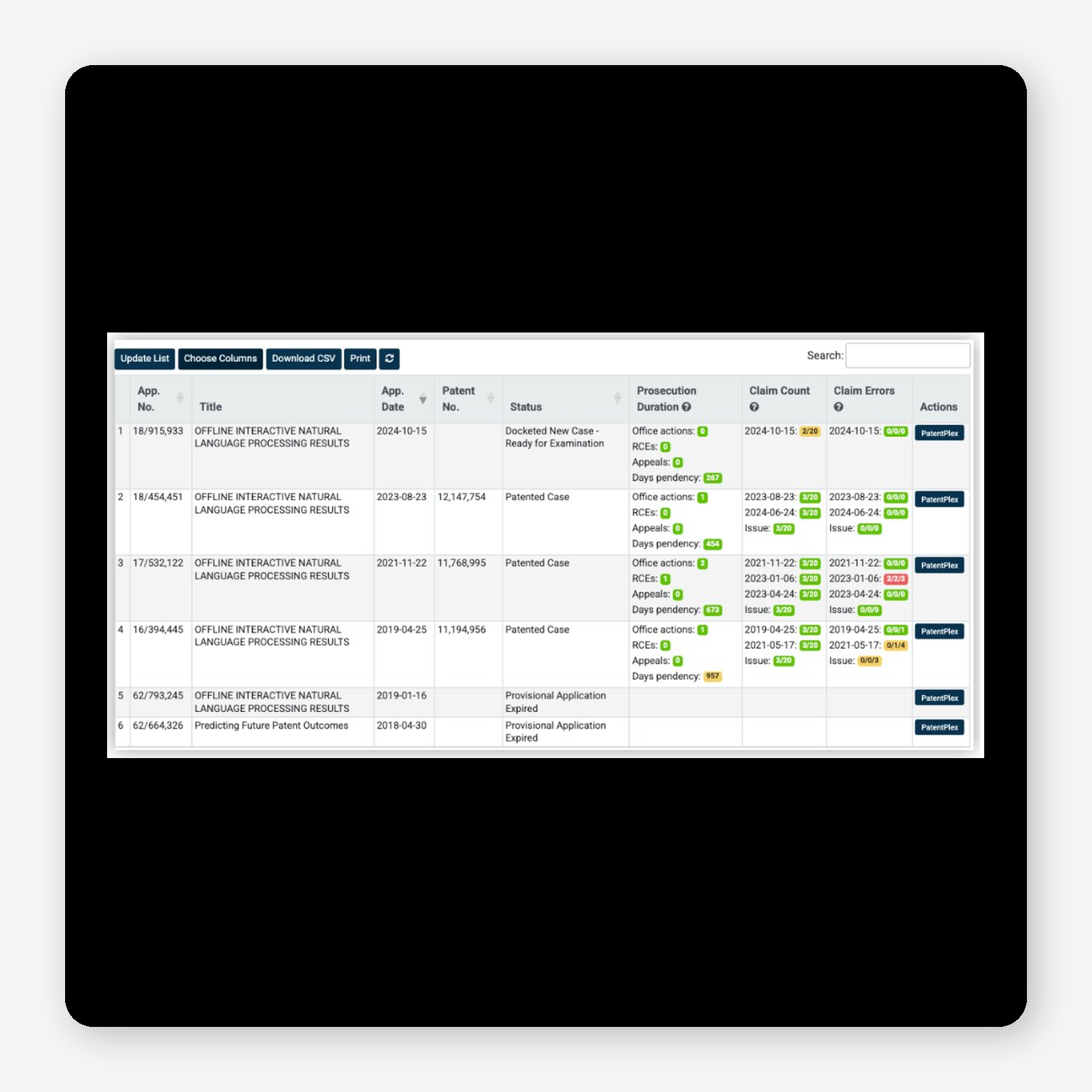
Patent Bots is a suite of AI-enabled and rule-based tools designed for patent drafting, proofreading, and prosecution support. It includes multiple modules for tasks such as claim analysis, office action preparation, examiner research, and patent data review. Patent Bots focuses on automating repetitive parts of patent preparation and providing structured insights, such as examiner statistics and art unit predictions, within a single toolset.
Key features:
- Patent proofreading: Detects antecedent basis issues, inconsistencies, and drafting errors using rule-based analysis
- Patent drafting support: Assists with drafting sections, generating OA shells, and completing USPTO forms
- Office action preparation: Supports response drafting and document generation for prosecution workflows
How it differs from DeepIP:
Patent Bots focuses on modular tools for specific prosecution and drafting tasks, while DeepIP centers on AI-driven drafting and analysis within a more unified drafting workflow.
User testimonial: Not publicly available
6. Patently: Best For Patent‑Lifecycle Teams That Want AI‑Assisted Support
Patently is an AI platform that supports patent search, drafting, prosecution, licensing analysis, and portfolio workflows within a unified system. It connects semantic patent search, drafting tools, claim charting, and project-level collaboration, allowing teams to manage patent work across multiple stages without switching platforms.
Key features:
- Patent search: Uses semantic search and filtering to identify relevant patents and group results by family
- Patent drafting: Generates claims, figures, and specifications from invention disclosures with an AI assistant
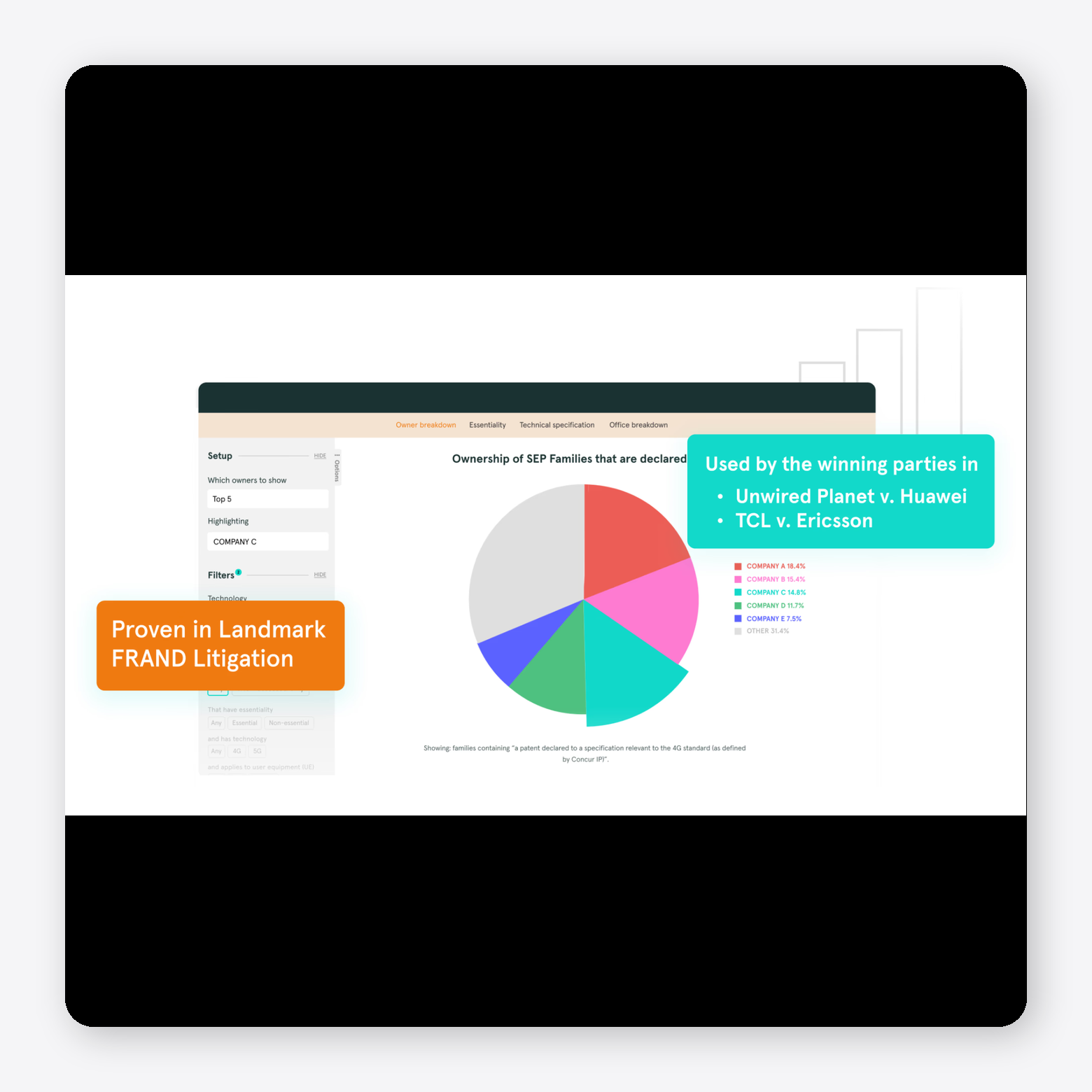
- Claim charting: Maps patents to technical documents, including standards and product specifications
How it differs from DeepIP:
Patently supports a broader range of patent lifecycle tasks, including search, licensing analytics, and portfolio collaboration, while DeepIP focuses more on drafting and prosecution workflows.
User testimonial:
“Writing patents with AI using Patently Create was a breeze. Particularly like the drawing editing, and automated diagramming.” User review
7. PowerPatent: Best For Automating the Patent Drafting Process

PowerPatent is an AI platform focused on generating first-draft patent applications from invention disclosures, claims, and supporting materials. It structures sections such as background, summary, claims, and descriptions, while also supporting figure generation, diagnostics, and collaboration between inventors and attorneys. PowerPatent includes tools for novelty search, claim support checks, and document-level analysis within a drafting workflow.
Key features:
- Patent application drafting: Generates complete first drafts from claims, summaries, and invention disclosures
- Section generation: Builds structured sections including background, summary, abstract, and detailed descriptions
- Figure and flowchart support: Creates and manages drawings and corresponding descriptions within the application

How it differs from DeepIP:
PowerPatent focuses on generating structured first drafts from invention inputs, while DeepIP places more emphasis on iterative drafting, analysis, and prosecution workflows.
User testimonial: Not publicly available
8. Quartet: Patent Searchers and Analysts Who Want AI-Augmented Results

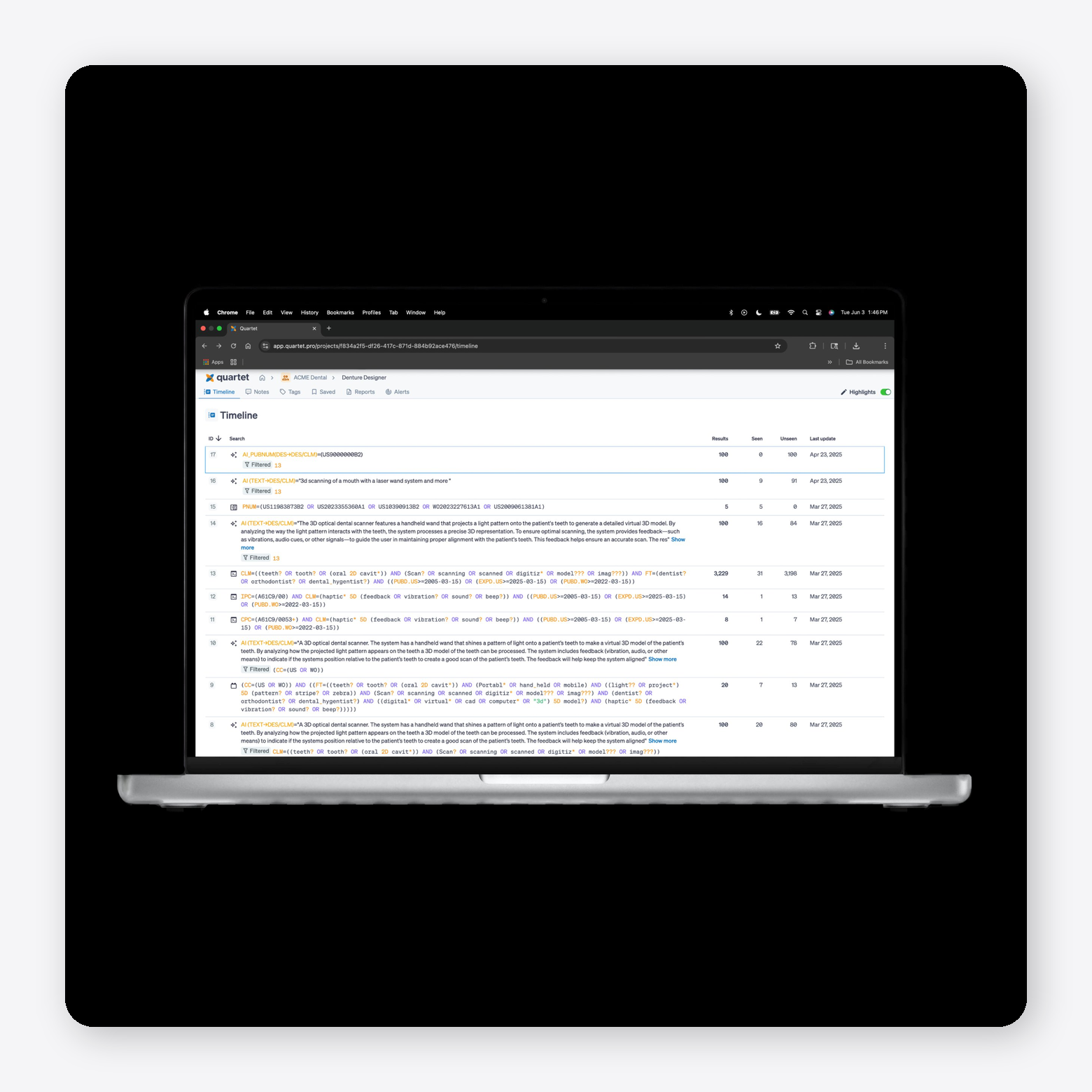
Quartet is an AI-driven patent search platform designed to identify prior art across global patent and non-patent literature. It combines natural language processing with traditional search methods, allowing users to run structured searches, review patent families, and analyze results within a project-based workspace. Quartet also supports collaboration, annotation, and export workflows for patent search and analysis tasks.
Key features:
- AI-powered patent search: Combines natural language processing with traditional search techniques to identify relevant prior art
- Patent summaries and chat: 生成 AI 摘要,並允許使用者查詢專利、專利家族及搜尋結果
- 圖式元件偵測: 將圖式元件編號對應至相關文字,以便更輕鬆地審閱專利文件
與 DeepIP 的差異:
Quartet 專注於專利檢索與先前技術探索,而 DeepIP 則以專利撰寫與審查流程為核心,並提供 AI 輔助內容生成功能。
使用者見證: 未公開
9. SenseIP:為尋求更快速、低成本智慧財產權解決方案的發明人、新創公司及技術轉移團隊所設計

SenseIP 是一個專為發明人、新創公司及研發團隊設計的 AI 平台,用於評估創意並從早期概念生成專利草稿。它支援以自然語言輸入,根據現有專利數據進行專利性評估,並能生成臨時與正式專利申請案。該平台還整合了創意捕捉、迭代、協作及基礎組合管理工具,提供單一工作空間。
主要功能:
- 專利性評估: 利用經全球專利數據訓練的 AI 來評估創意的創新性
- 專利撰寫: 根據使用者輸入生成臨時與正式專利申請案
- 創意捕捉與優化: 允許使用者透過 AI 介面描述、優化並迭代概念

與 DeepIP 的差異:
SenseIP 專注於早期創意評估與從簡單輸入生成草稿,而 DeepIP 則是為專利專業人士所使用的結構化撰寫與審查流程而打造。
使用者見證: 未公開
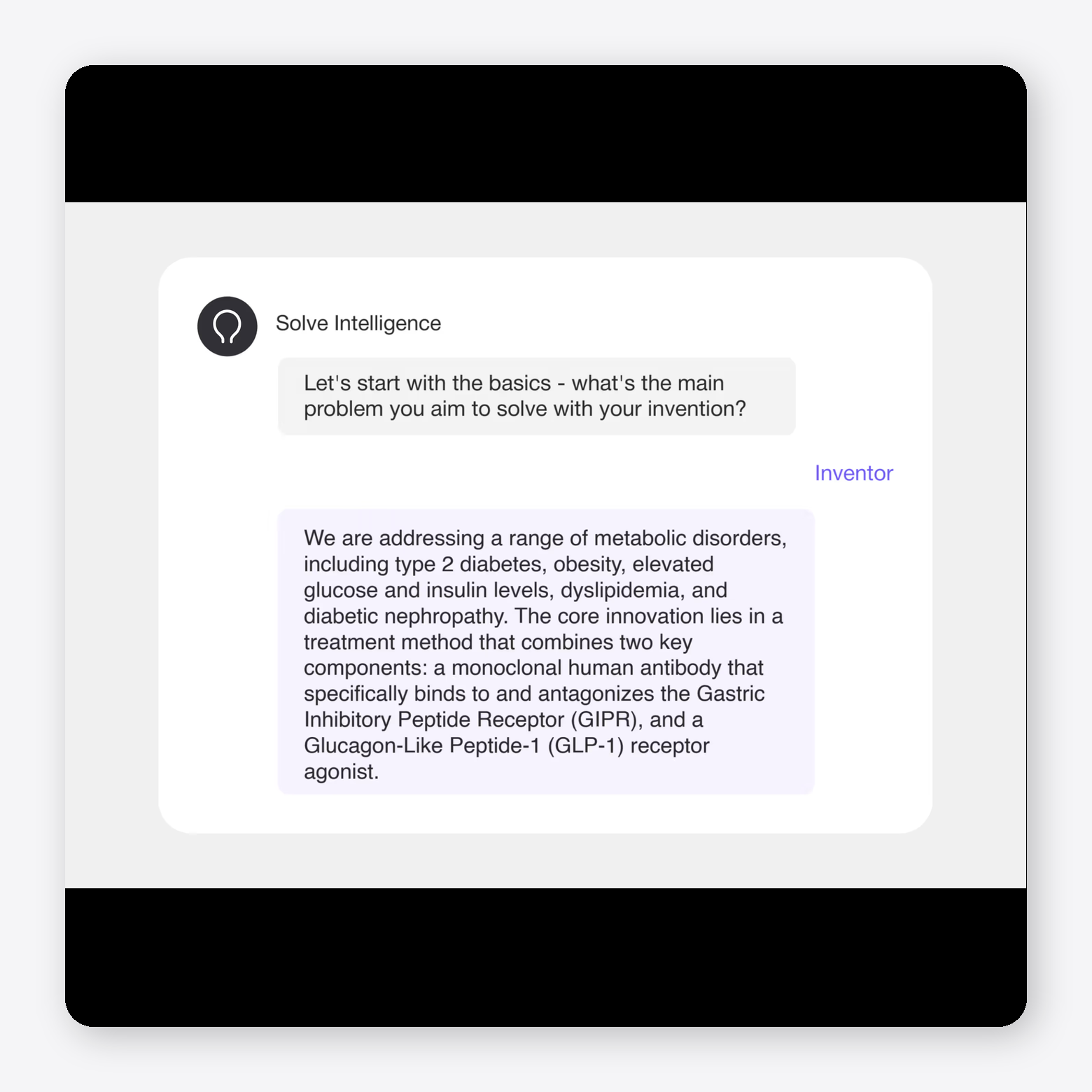
10. Solve Intelligence:最適合加速撰寫申請與回覆審查意見通知書
Solve Intelligence 是一個專為專利撰寫、審查程序、發明揭露管理及權利要求對照表製作所設計的 AI 平台,將上述功能整合於單一系統中。它支援符合專利律師工作流程的互動式撰寫,能生成附帶引用來源的審查意見回覆,並提供管理發明揭露與專利組合分析的工具。
主要功能:
- 權利要求對照表生成: 建立無效性、侵權、標準必要專利(SEP)及自由實施(FTO)權利要求對照表,並提供結構化輸出
- AI 輔助分析: 評估審查委員的核駁理由、先前技術及權利要求範圍,以建議回覆策略
- 多來源引用: 將輸出內容連結至檔案包文件、先前技術及判例法,並提供可展開的推理說明
與 DeepIP 的差異:
Solve Intelligence 將撰寫、審查程序與權利要求對照表製作結合,並提供可配置的工作流程與多來源引用支援;而 DeepIP 則更側重於提示詞驅動工作流程下的撰寫與審查程序。
使用者見證:
「就像任何新工具一樣,需要一段學習曲線。但只要找到能讓軟體依照您期望方式撰寫的指令,就能將其加入模板,讓它未來都以該方式運作。一旦建立好模板,後續幾乎不需要進行什麼修改。」 使用者評論
DeepIP 與 Patlytics 比較
DeepIP 與 Patlytics 皆支援專利撰寫與分析,但兩者的工作流程切入點不同。
DeepIP 主要適用於專注於撰寫、先前技術分析及審查程序工作流程的團隊。它有助於連結發明揭露、權利要求發展、專利性審查及審查程序相關分析,並能與 Microsoft Word 及 IP 管理系統等工具整合。
Patlytics 的功能更為全面。它在單一 AI 原生平台上支援完整的專利生命週期,包括撰寫、審查意見通知書(Office Actions)、專利檢索、無效性分析、侵權分析、自由實施(FTO)分析、標準必要專利(SEP)分析、權利要求對照表(Claim Charting)以及專利組合分析。對於僅需撰寫輔助功能的團隊,DeepIP 或許已足夠;但對於需要將申請、訴訟與組合策略等分析工作串聯起來的律師事務所與企業內部團隊而言,Patlytics 是更強大的端到端解決方案。
實際應用場景
功能比較只能呈現部分事實,真正的差異在於日常執行層面。
像 DeepIP 這類工具或許能協助團隊改善撰寫、專利性審查及申請流程。然而,Patlytics 的設計初衷是將這些脈絡貫穿於整個專利生命週期,從撰寫、審查意見通知書到無效性、侵權、FTO 及組合分析皆涵蓋在內。這一點至關重要,因為專利團隊真正的瓶頸不在於單一任務,而在於工作在不同階段轉換時,反覆流失的脈絡資訊。
一家 Am Law 100 律師事務所透過試用 Patlytics 實現了 專案時間縮短 80%,使其律師能顯著提升固定費用專利服務的獲利能力。該專案負責人表示:「過去需要數週才能完成的工作,現在只需幾天。對於任何希望在專利申請與諮詢領域保持領先的律師事務所來說,這都是不可或缺的工具。」
這就是「撰寫輔助工具」與「端到端專利分析平台」之間的實際差異:Patlytics 協助團隊在決定律師槓桿效益、利潤空間與防禦能力的關鍵工作中,更快速地推進。
了解專利團隊如何在不降低審查標準的前提下,減少手動工作。
Patlytics 協助律師事務所與企業內部團隊精簡專利分析流程,同時確保律師的專業判斷始終處於核心地位。
選擇 DeepIP 替代方案的最終建議
在評估 DeepIP 的替代方案時,請聚焦於您試圖解決的工作流程缺口。如果需求僅限於撰寫輔助,單點解決方案或許足夠;但如果團隊需要將檢索、撰寫、申請、權利要求對照、無效性分析、侵權分析、FTO 及組合管理整合運作,請優先選擇具備引證支援輸出、權利要求層級映射、整合式圖表製作以及企業級安全性的平台。
DeepIP 在 AI 輔助專利撰寫方面扮演一定角色,但許多團隊需要的遠不止於文件處理與提示詞驅動的輸出。隨著專利工作擴展至檢索、分析、申請與組合決策,對整合式工具的需求變得愈發明確。
替代方案應能支援工作在生命週期各階段間的流轉。撰寫應連結至先前技術,審查意見通知書應回溯至權利要求,而分析洞察則應延伸至組合決策。當這些環節彼此孤立時,團隊將花費更多時間在重複工作與管理交接上。
請聚焦於與您團隊運作方式相符的平台。考量輸出的審查方式、資料處理流程,以及該工具是否支援您工作的全貌。透過實際案件進行測試,將能看出仍需多少手動投入,以及該系統是否能融入現有的工作流程。
對於需要超越撰寫輔助功能的團隊,Patlytics 是最強大的 DeepIP 替代方案。它在單一專利專用平台上整合了檢索、撰寫、申請、無效性分析、FTO、侵權分析、權利要求對照、專利組合精簡與管理功能,並提供具備引證支援的輸出與企業級安全性。
準備好選擇一套專為律師實際工作需求打造的專利分析平台了嗎?
從分散的檢索與撰寫工具,轉向單一平台,實現跨申請、訴訟與組合策略的引證支援專利分析。
DeepIP 替代方案常見問題解答
哪種 AI 最適合撰寫專利?
最適合撰寫專利的 AI 取決於您需要涵蓋的工作流程範圍。有些工具專注於根據提示生成草稿文本,而另一些工具則圍繞發明揭露書、先前技術和權利要求開發來建構撰寫流程。將撰寫與分析及引用支援輸出相結合的平台,往往能在各類申請案中提供更一致的成果。
誰在使用 Patlytics?
Patlytics 的使用者包括專利律師、企業內部智慧財產權團隊以及企業研發部門。它支援處理專利申請與訴訟的法律事務所,以及管理內部專利組合、發明揭露書和專利策略的企業。
哪種是最好的專利檢索工具?
最好的專利檢索工具取決於您計畫如何使用檢索結果。有些工具專注於關鍵字和分類檢索,而另一些則利用 AI 來呈現相關的先前技術、歸類專利家族並提供摘要。將檢索結果與撰寫、無效性分析或權利要求對照表相結合的平台,可以減少專利工作流程中的重複作業。
Patlytics 有哪些優勢?
Patlytics 將撰寫、先前技術分析、權利要求對照表和專利組合管理整合至單一系統中。它支援引用支援的輸出、權利要求層級分析以及專利與產品對應,讓團隊無需切換工具即可在整個專利生命週期中運用洞察。
最佳專利撰寫 DeepIP 替代方案(按工作流程、準確度與自動化程度比較)
AI 工具正在重塑專利團隊撰寫、審閱及管理申請案的方式,而 DeepIP 等平台已成為這波轉變的一部分。然而,許多團隊現在需要的已不僅僅是基於提示詞(prompt-based)的撰寫功能,這也是他們積極尋找能支援完整專利工作流程的 DeepIP 替代方案的原因。根據 湯森路透 (Thomson Reuters)的數據顯示,AI 現今每週可為律師節省 4 小時,五年內更可提升至每週 12 小時。這種額外釋放出的產能,正推動各團隊採用不僅能生成文字,更能實質推進工作進度的工具。
本指南根據工作流程覆蓋範圍、輸出準確度及自動化深度,比較了市面上最優秀的 DeepIP 替代方案。同時也說明了 DeepIP 的不足之處,以及若您需要一套更完整的 專利分析工具時,該注意哪些重點。
別再為了重建專利背景資訊而在各個斷裂的工具間來回切換。 了解 Patlytics 如何將撰寫、審查、權利要求分析、侵權分析、FTO(自由實施)及專利組合管理等工作流程,整合在同一個 AI 原生專利平台中。
重點摘要:
- DeepIP 專注於撰寫與審查,但許多團隊需要的是能支援完整專利生命週期的工具
- 端到端平台能減少工具切換,並確保各工作流程間的洞察資訊保持連貫
- 評估 DeepIP 替代方案的團隊應優先考量工作流程覆蓋率、可追溯性及整合能力
什麼是 DeepIP?
DeepIP 是一個專為專利從業人員設計的 AI 平台,支援撰寫、審閱及審查任務。它透過基於提示詞的工作流程,協助生成申請案內容、分析先前技術並準備審查意見通知書的答覆。
該平台與 Microsoft Word 及 IP 管理系統等工具整合,讓律師能在熟悉的撰寫環境中工作。它同時支援權利要求生成、修正建議、具引文支持的分析、專利性評估、無效性分析以及專利組合層級的洞察。
團隊為何可能需要比 DeepIP 更強大的功能(基於真實用戶回饋)
DeepIP 在市場上已獲得實質的採用,但深入測試過的從業人員也指出了幾個反覆出現的痛點,在決定採用前值得深入了解。
Word 以外的工作流程碎片化
根據專利律師 Tim Bright 的 2025 實測評論,Word 外掛程式並不支援 OA 模組的完整功能,導致使用者必須在 Word 與網頁應用程式之間來回切換才能完成單一任務。Bright 指出,這種不斷切換的過程「中斷了工作流程」,也抵銷了該工具所承諾的效率提升。
輸出品質極度依賴提示詞技巧
A 2026 年 Patentext 評比 研究發現,DeepIP 的提示詞驅動介面所產出的結果,會因提問方式的不同而有顯著差異。一位 DeepIP 使用者在 DeepIP 主辦的網路研討會中直言:「這就像擁有一群實習生。如果你問實習生一個非常模糊的問題,你很可能會得到一個失焦的回答,甚至是一堆廢話。」
高昂定價對小型事務所造成負擔
DeepIP 採用客製化的授權定價模式,並未公開費率。根據 2025 年 Waves & Algorithms 的市場研究,估計每位使用者每月費用約為 200 至 500 美元。中大型事務所或許能負擔,但對於個人執業者及小型精品專利事務所而言,這引發了關於投資報酬率的實際疑慮。
輔助撰寫,而非自動化撰寫
DeepIP 能加速撰寫流程,但無法取代律師的專業判斷,特別是在需要更多人工審核的生物技術與製藥專利申請案中。在一項針對 135 位專利專業人士的即時民調中,於 DeepIP 與 IPWatchdog 共同舉辦的座談會期間,45% 的受訪者仍將專利準備與審查視為他們工作流程中最大的挑戰。
缺乏端到端的生命週期覆蓋
A 2026 年 Patentext 並列比較 指出 DeepIP 涵蓋了撰寫與審查功能,但缺乏侵權分析、無效性分析、權利要求對照表(claim charting)及專利組合管理功能。若團隊需要一個能涵蓋完整專利生命週期的單一平台,則必須額外搭配其他工具。
從發明揭露到侵權偵測,從撰寫到無效性分析, 體驗單一 AI 平台如何實現端到端的全生命週期管理。
選擇 DeepIP 替代方案時應考量的關鍵功能
合適的 DeepIP 替代方案不應僅限於生成草稿。它必須能串聯檢索、撰寫、分析與專利組合管理工作流程,讓團隊無需在不同工具間重複作業。
請留意:
- 具備引用來源的產出: 分析報告、草稿與圖表應連結至原始資料,以便律師能驗證每一項建議。
- 請求項層級映射: 平台應將請求項限制條件映射至先前技術、產品、說明書與佐證資料,而不僅僅是提供排序後的搜尋結果。
- 整合式請求項對照表: 請求項對照表應直接連結至侵權、無效性、自由實施(FTO)與授權工作流程。
- 串聯式審查工作流程: 審查意見通知書(Office Action)分析應連結至請求項、引證案、撰寫歷程與答辯策略。
- 專利組合情報: 平台應支援分類、汰除、專利與產品映射,以及專利組合層級的決策分析。
- 企業級安全性: SOC 2 Type 2 與 ISO 27001 應為基本要求;ISO 42001 正逐漸成為 AI 管理的業界標準。
- 具名實證: 優先選擇您所屬產業中已有企業採用的平台,而不僅僅是參考匿名推薦。
DeepIP 的最佳替代方案
DeepIP 涵蓋了部分專利撰寫與審查流程,但許多團隊需要功能更廣泛的工具,而不僅限於文件處理。此清單包含支援專利生命週期各個階段的平台,從撰寫與前案檢索,到權利要求對照表製作與專利組合管理,應有盡有。
我們根據工作流程覆蓋範圍、輸出結構以及各工具對實際專利任務的支援程度,篩選出這些 DeepIP 的替代方案。評估標準包括撰寫支援、前案整合、審查意見通知書處理,以及跨專利生命週期連結洞察的能力。
1. Patlytics:最適合需要端到端專利情報與分析的法律事務所及企業內部團隊
Patlytics 是一款 AI 原生專利平台,專為需要超越單純撰寫輔助的團隊所打造。它將發明揭露、申請案撰寫、審查意見分析、前案審查、權利要求對照、無效性分析、侵權分析、FTO(自由實施)、專利汰除及組合管理整合於單一系統中。
該平台以可驗證的輸出為核心設計。專利律師可以生成草稿、將權利要求對應至證據、分析專利性或無效性,並製作具備來源連結支援的逐項權利要求對照表。這為團隊提供了可審查的基礎,而非零散的 AI 生成文字。Patlytics 還能將審查與撰寫工作與後續的專利組合及執行決策連結起來。團隊可以對專利進行分類、識別汰除候選對象、將專利對應至產品,並在不同工作流程間傳遞洞察,無需在不同工具中重複進行分析。
主要功能:
- 專利申請案撰寫: 支援根據技術文件、圖式及發明揭露書等原始資料進行 AI 輔助撰寫
- 審查意見通知書分析與答辯: 透過分析審查意見通知書、識別答辯策略,並草擬修正案與論點,進而生成結構化的答辯內容
- 侵權偵測: 利用結構化權利要求對照表,識別潛在侵權行為並將權利要求對應至產品功能
- 權利要求對照表生成: 建立逐項對應的權利要求對照表,並連結相關佐證資料
- 專利精簡: 協助識別資產價值高低,以支援專利組合的優先順序排序與決策制定
- 安全性與合規性: 符合 SOC 2 Type 2、ISO 27001、ISO 42001 及 GDPR 要求,並採用加密與隔離的資料處理方式
與 DeepIP 的差異:
Patlytics 將撰寫、分析與專利組合工作流程整合於單一平台,而 DeepIP 則更側重於文件環境下的撰寫與審查任務。Patlytics 內建專利組合管理與權利要求層級的智慧分析功能,減少了在整個專利生命週期中對多種獨立工具的需求。
使用者見證:
「Patlytics 易於使用且好上手,能協助我們的團隊發現平時容易忽略的問題。Patlytics 團隊與客戶服務表現卓越,讓我們對這款攸關公司獲利的產品充滿信心。我們每天都會使用它,而且對於它能如此輕鬆地整合進我們的工作流程感到驚訝。」- G2 使用者
2. ClaimMaster:最適合自動化專利校對
ClaimMaster 是一款 Microsoft Word 外掛程式,專為專利校對、撰寫支援與文件自動化而設計。它專注於利用符合專利撰寫標準的規則檢查,來識別權利要求、說明書與圖式中的錯誤。ClaimMaster 還包含生成撰寫章節、分析審查意見通知書以及從公開來源下載專利資料的工具,所有功能皆在文件工作流程中完成。
主要功能:
- Patent proofreading: Detects claim errors, antecedent basis issues, incorrect dependencies, and inconsistencies using customizable rules
- Specification and figure review: Checks part numbers, acronyms, formatting issues, and missing descriptions across specifications and drawings
- Patent drafting support: Generates document sections, figures, and descriptions using templates and optional AI tools
How it differs from DeepIP:
ClaimMaster focuses on document-level proofreading and drafting support within Microsoft Word, while DeepIP applies AI across drafting and prosecution tasks with more emphasis on generating and iterating on content.
User testimonial:
“I haven't run into any things that I dislike. They periodically send updates which fix issues usually caused by changes at the USPTO. I wish it would allow 2 users per subscription so my paralegal can do some of the tasks without me having to buy her own subscription.” User review
3. Edge: Inventors and Corporate R&D Teams Who Need Help Producing Clearer Disclosures
Edge is an AI platform focused on patent drafting and invention disclosure workflows, with additional support for trademark search. Its patent drafting module, Ingenia, supports claims, specifications, figures, and disclosures within a single interface. Edge is designed around task-based workflows, where users input inventor materials and generate structured patent content, with support for regional requirements such as USPTO and EPO standards.
Key features:
- Patent drafting: Supports AI-assisted drafting of claims and specifications based on inventor inputs
- Figure generation and editing: Creates and edits patent figures, including flowcharts and line drawings, with synchronized elements
- Invention disclosure intake: Processes inventor materials and structures them into formal disclosures
How it differs from DeepIP:
Edge focuses on structured drafting and disclosure workflows with integrated figure handling and regional support, while DeepIP emphasizes iterative drafting, analysis, and prosecution.
User testimonial: Not publicly available
4. IP Author: Best for Patent Practitioners and IP Departments Handling High‑Volume Filings
IP Author is an AI platform that supports patent drafting, prior art search, and office action responses within a single system. It structures patent applications from invention disclosures, maps prior art to claims, and generates response strategies based on examiner feedback and prosecution history. The platform also includes similarity scoring, global search across patent and non-patent literature, and tools for managing drafting consistency across claims, figures, and technical content.
Key features:
- Patent application drafting: Generates claims and specifications from invention disclosures with structured alignment across sections
- Office action analysis and response: Summarizes examiner rejections, maps references to claims, and generates response strategies with amendments and arguments
- Prior art search: Searches global patent and non-patent literature with filtering by jurisdiction, classification, and publication data
How it differs from DeepIP:
IP Author combines drafting, search, and prosecution insights in a single workflow, with more emphasis on prior art integration and examiner-level analysis alongside drafting tasks.
User testimonial: Not publicly available
5. Patent Bots: Best For Automating Proofreading and Streamlining Patent Drafting
Patent Bots is a suite of AI-enabled and rule-based tools designed for patent drafting, proofreading, and prosecution support. It includes multiple modules for tasks such as claim analysis, office action preparation, examiner research, and patent data review. Patent Bots focuses on automating repetitive parts of patent preparation and providing structured insights, such as examiner statistics and art unit predictions, within a single toolset.
Key features:
- Patent proofreading: Detects antecedent basis issues, inconsistencies, and drafting errors using rule-based analysis
- Patent drafting support: Assists with drafting sections, generating OA shells, and completing USPTO forms
- Office action preparation: Supports response drafting and document generation for prosecution workflows
How it differs from DeepIP:
Patent Bots focuses on modular tools for specific prosecution and drafting tasks, while DeepIP centers on AI-driven drafting and analysis within a more unified drafting workflow.
User testimonial: Not publicly available
6. Patently: Best For Patent‑Lifecycle Teams That Want AI‑Assisted Support
Patently is an AI platform that supports patent search, drafting, prosecution, licensing analysis, and portfolio workflows within a unified system. It connects semantic patent search, drafting tools, claim charting, and project-level collaboration, allowing teams to manage patent work across multiple stages without switching platforms.
Key features:
- Patent search: Uses semantic search and filtering to identify relevant patents and group results by family
- Patent drafting: Generates claims, figures, and specifications from invention disclosures with an AI assistant
- Claim charting: Maps patents to technical documents, including standards and product specifications
How it differs from DeepIP:
Patently supports a broader range of patent lifecycle tasks, including search, licensing analytics, and portfolio collaboration, while DeepIP focuses more on drafting and prosecution workflows.
User testimonial:
“Writing patents with AI using Patently Create was a breeze. Particularly like the drawing editing, and automated diagramming.” User review
7. PowerPatent: Best For Automating the Patent Drafting Process
PowerPatent is an AI platform focused on generating first-draft patent applications from invention disclosures, claims, and supporting materials. It structures sections such as background, summary, claims, and descriptions, while also supporting figure generation, diagnostics, and collaboration between inventors and attorneys. PowerPatent includes tools for novelty search, claim support checks, and document-level analysis within a drafting workflow.
Key features:
- Patent application drafting: Generates complete first drafts from claims, summaries, and invention disclosures
- Section generation: Builds structured sections including background, summary, abstract, and detailed descriptions
- Figure and flowchart support: Creates and manages drawings and corresponding descriptions within the application
How it differs from DeepIP:
PowerPatent focuses on generating structured first drafts from invention inputs, while DeepIP places more emphasis on iterative drafting, analysis, and prosecution workflows.
User testimonial: Not publicly available
8. Quartet: Patent Searchers and Analysts Who Want AI-Augmented Results
Quartet is an AI-driven patent search platform designed to identify prior art across global patent and non-patent literature. It combines natural language processing with traditional search methods, allowing users to run structured searches, review patent families, and analyze results within a project-based workspace. Quartet also supports collaboration, annotation, and export workflows for patent search and analysis tasks.
Key features:
- AI-powered patent search: Combines natural language processing with traditional search techniques to identify relevant prior art
- Patent summaries and chat: 生成 AI 摘要,並允許使用者查詢專利、專利家族及搜尋結果
- 圖式元件偵測: 將圖式元件編號對應至相關文字,以便更輕鬆地審閱專利文件
與 DeepIP 的差異:
Quartet 專注於專利檢索與先前技術探索,而 DeepIP 則以專利撰寫與審查流程為核心,並提供 AI 輔助內容生成功能。
使用者見證: 未公開
9. SenseIP:為尋求更快速、低成本智慧財產權解決方案的發明人、新創公司及技術轉移團隊所設計
SenseIP 是一個專為發明人、新創公司及研發團隊設計的 AI 平台,用於評估創意並從早期概念生成專利草稿。它支援以自然語言輸入,根據現有專利數據進行專利性評估,並能生成臨時與正式專利申請案。該平台還整合了創意捕捉、迭代、協作及基礎組合管理工具,提供單一工作空間。
主要功能:
- 專利性評估: 利用經全球專利數據訓練的 AI 來評估創意的創新性
- 專利撰寫: 根據使用者輸入生成臨時與正式專利申請案
- 創意捕捉與優化: 允許使用者透過 AI 介面描述、優化並迭代概念
與 DeepIP 的差異:
SenseIP 專注於早期創意評估與從簡單輸入生成草稿,而 DeepIP 則是為專利專業人士所使用的結構化撰寫與審查流程而打造。
使用者見證: 未公開
10. Solve Intelligence:最適合加速撰寫申請與回覆審查意見通知書
Solve Intelligence 是一個專為專利撰寫、審查程序、發明揭露管理及權利要求對照表製作所設計的 AI 平台,將上述功能整合於單一系統中。它支援符合專利律師工作流程的互動式撰寫,能生成附帶引用來源的審查意見回覆,並提供管理發明揭露與專利組合分析的工具。
主要功能:
- 權利要求對照表生成: 建立無效性、侵權、標準必要專利(SEP)及自由實施(FTO)權利要求對照表,並提供結構化輸出
- AI 輔助分析: 評估審查委員的核駁理由、先前技術及權利要求範圍,以建議回覆策略
- 多來源引用: 將輸出內容連結至檔案包文件、先前技術及判例法,並提供可展開的推理說明
與 DeepIP 的差異:
Solve Intelligence 將撰寫、審查程序與權利要求對照表製作結合,並提供可配置的工作流程與多來源引用支援;而 DeepIP 則更側重於提示詞驅動工作流程下的撰寫與審查程序。
使用者見證:
「就像任何新工具一樣,需要一段學習曲線。但只要找到能讓軟體依照您期望方式撰寫的指令,就能將其加入模板,讓它未來都以該方式運作。一旦建立好模板,後續幾乎不需要進行什麼修改。」 使用者評論
DeepIP 與 Patlytics 比較
DeepIP 與 Patlytics 皆支援專利撰寫與分析,但兩者的工作流程切入點不同。
DeepIP 主要適用於專注於撰寫、先前技術分析及審查程序工作流程的團隊。它有助於連結發明揭露、權利要求發展、專利性審查及審查程序相關分析,並能與 Microsoft Word 及 IP 管理系統等工具整合。
Patlytics 的功能更為全面。它在單一 AI 原生平台上支援完整的專利生命週期,包括撰寫、審查意見通知書(Office Actions)、專利檢索、無效性分析、侵權分析、自由實施(FTO)分析、標準必要專利(SEP)分析、權利要求對照表(Claim Charting)以及專利組合分析。對於僅需撰寫輔助功能的團隊,DeepIP 或許已足夠;但對於需要將申請、訴訟與組合策略等分析工作串聯起來的律師事務所與企業內部團隊而言,Patlytics 是更強大的端到端解決方案。
實際應用場景
功能比較只能呈現部分事實,真正的差異在於日常執行層面。
像 DeepIP 這類工具或許能協助團隊改善撰寫、專利性審查及申請流程。然而,Patlytics 的設計初衷是將這些脈絡貫穿於整個專利生命週期,從撰寫、審查意見通知書到無效性、侵權、FTO 及組合分析皆涵蓋在內。這一點至關重要,因為專利團隊真正的瓶頸不在於單一任務,而在於工作在不同階段轉換時,反覆流失的脈絡資訊。
一家 Am Law 100 律師事務所透過試用 Patlytics 實現了 專案時間縮短 80%,使其律師能顯著提升固定費用專利服務的獲利能力。該專案負責人表示:「過去需要數週才能完成的工作,現在只需幾天。對於任何希望在專利申請與諮詢領域保持領先的律師事務所來說,這都是不可或缺的工具。」
這就是「撰寫輔助工具」與「端到端專利分析平台」之間的實際差異:Patlytics 協助團隊在決定律師槓桿效益、利潤空間與防禦能力的關鍵工作中,更快速地推進。
了解專利團隊如何在不降低審查標準的前提下,減少手動工作。
Patlytics 協助律師事務所與企業內部團隊精簡專利分析流程,同時確保律師的專業判斷始終處於核心地位。
選擇 DeepIP 替代方案的最終建議
在評估 DeepIP 的替代方案時,請聚焦於您試圖解決的工作流程缺口。如果需求僅限於撰寫輔助,單點解決方案或許足夠;但如果團隊需要將檢索、撰寫、申請、權利要求對照、無效性分析、侵權分析、FTO 及組合管理整合運作,請優先選擇具備引證支援輸出、權利要求層級映射、整合式圖表製作以及企業級安全性的平台。
DeepIP 在 AI 輔助專利撰寫方面扮演一定角色,但許多團隊需要的遠不止於文件處理與提示詞驅動的輸出。隨著專利工作擴展至檢索、分析、申請與組合決策,對整合式工具的需求變得愈發明確。
替代方案應能支援工作在生命週期各階段間的流轉。撰寫應連結至先前技術,審查意見通知書應回溯至權利要求,而分析洞察則應延伸至組合決策。當這些環節彼此孤立時,團隊將花費更多時間在重複工作與管理交接上。
請聚焦於與您團隊運作方式相符的平台。考量輸出的審查方式、資料處理流程,以及該工具是否支援您工作的全貌。透過實際案件進行測試,將能看出仍需多少手動投入,以及該系統是否能融入現有的工作流程。
對於需要超越撰寫輔助功能的團隊,Patlytics 是最強大的 DeepIP 替代方案。它在單一專利專用平台上整合了檢索、撰寫、申請、無效性分析、FTO、侵權分析、權利要求對照、專利組合精簡與管理功能,並提供具備引證支援的輸出與企業級安全性。
準備好選擇一套專為律師實際工作需求打造的專利分析平台了嗎?
從分散的檢索與撰寫工具,轉向單一平台,實現跨申請、訴訟與組合策略的引證支援專利分析。
DeepIP 替代方案常見問題解答
哪種 AI 最適合撰寫專利?
最適合撰寫專利的 AI 取決於您需要涵蓋的工作流程範圍。有些工具專注於根據提示生成草稿文本,而另一些工具則圍繞發明揭露書、先前技術和權利要求開發來建構撰寫流程。將撰寫與分析及引用支援輸出相結合的平台,往往能在各類申請案中提供更一致的成果。
誰在使用 Patlytics?
Patlytics 的使用者包括專利律師、企業內部智慧財產權團隊以及企業研發部門。它支援處理專利申請與訴訟的法律事務所,以及管理內部專利組合、發明揭露書和專利策略的企業。
哪種是最好的專利檢索工具?
最好的專利檢索工具取決於您計畫如何使用檢索結果。有些工具專注於關鍵字和分類檢索,而另一些則利用 AI 來呈現相關的先前技術、歸類專利家族並提供摘要。將檢索結果與撰寫、無效性分析或權利要求對照表相結合的平台,可以減少專利工作流程中的重複作業。
Patlytics 有哪些優勢?
Patlytics 將撰寫、先前技術分析、權利要求對照表和專利組合管理整合至單一系統中。它支援引用支援的輸出、權利要求層級分析以及專利與產品對應,讓團隊無需切換工具即可在整個專利生命週期中運用洞察。
頂尖 AI 驅動的
專利平台
縮短週期時間。提高利潤率。實現卓越的智慧財產權成果。