Moving at the Speed of Trust: Paul Lee on Building AI for Patent Attorneys
September 25, 2026
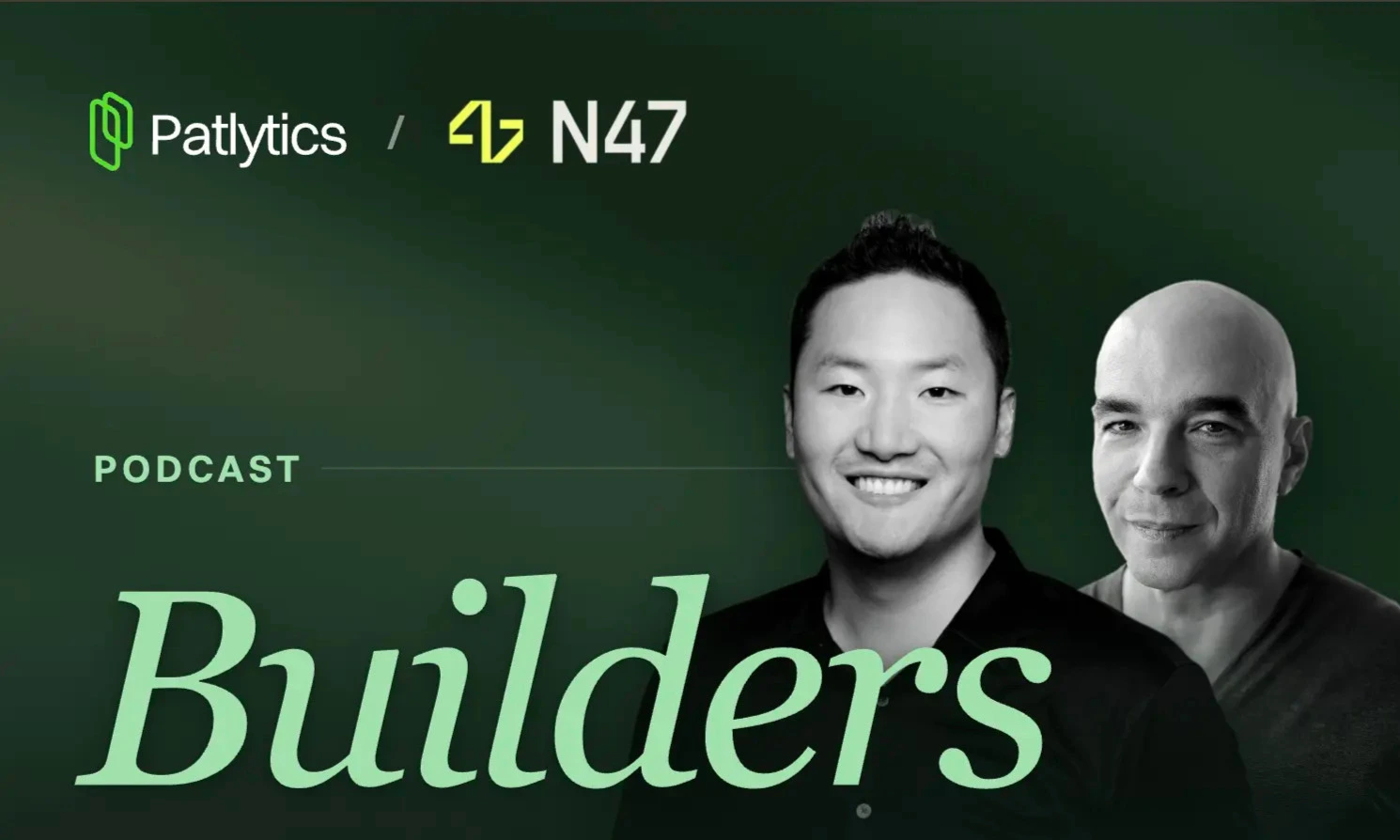
Paul Lee spent years as a venture capitalist before co-founding Patlytics. In under two and a half years, the company raised a Seed, Series A, and Series B without a formal pitch deck, and today 55% of Am Law 100 firms use the platform. On a recent episode of Builders, Paul sat down with Matthew Cowan, general partner at N47 and a Patlytics investor, to talk about how that happened.
The thread through the whole conversation is trust: how you build it with attorneys who have almost no tolerance for error, and how it shapes everything from fundraising to the product roadmap.
Key Takeaways
- Business first, fundraising second: Patlytics never went out to market for any round. The team focused on customers, the business model, and hiring, and investors came to them.
- Transparency plus shipping pace builds confidence: The early product wasn't perfect. Weekly major launches showed attorneys where it was headed.
- Accuracy is structural: Outputs are citation-backed and traceable to the source document, so attorneys can check every line.
- Two buyers, aligned: Law firms want to win and keep clients. In-house teams want to do more with less. The platform serves both and connects them.
- Build what frontier models can't copy: IP-native data, connected workflows, and network effects drive the roadmap.
From investor to founder
Paul's first company, Farm Table, failed shortly after he graduated. What stayed with him was the energy of building. As a VC at Tribe Capital, he learned how great companies get built, but always from the sidelines.
"I wanted to be in the mix," he told Matthew.
He saw an unusual window: legal AI, vertical AI, and IP all gaining momentum at once. He also had the right co-founder. Paul and CTO Arthur have been friends for about 10 years, since the University of Waterloo. In the company's first month, they each wrote a document on how to work with them: what makes them happy, how they like to communicate, and what breaks trust. The practice spread to the whole team.
Business first, fundraising follows
As an investor, Paul could spot founders whose decks were all storytelling and no business. "You're building a sandcastle," he said.
So Patlytics skipped the pitch deck. The team focused on a product customers love, a deep understanding of those customers, a business model that holds up, and the right people. Paul acknowledges his venture network helped. But the Seed, Series A, and Series B each came without the company actively raising.
Moving at the speed of trust
Law firms run on client trust, which makes relying on AI a real ask. Paul's answer is a phrase the team uses internally: Patlytics moves at the speed of trust.
In practice, that meant honesty about the product's early limits and a release pace customers could see. "These were not just little updates but massive product launches on a weekly level," Paul said. Attorneys who watched the product improve week over week developed confidence that it would get where they needed it.
It also meant talking to a lot of people. Paul set out to meet every patent attorney he could, then worked closely with the ones who gave the sharpest feedback. One was Bob Steinberg, then chair of the IP litigation practice at Latham & Watkins and now a Patlytics advisor. Another was an early angel investor who told Paul he was exhausted after 10 years of drafting claim charts by hand. He later joined the company.
That experience is why Paul rejects the worst early advice he got. An investor told him to perfect the product before launch, since patent attorneys only give you one shot. "Most attorneys, as long as you're transparent with where you are, where you're going, they would rather be kept honest," Paul said.
Accuracy attorneys can verify
Attorneys have a low tolerance for mistakes because their reputation depends on every argument. Paul explained that Patlytics pairs language models with retrieval, pulling text word by word from the source and showing exactly where each passage came from. Attorneys can trace the analysis back to the original document instead of taking it on faith.
He named two common mistakes founders make in high-stakes domains. The first is treating security lightly. Patlytics pursued SOC 2 Type 2 early and today also holds ISO 27001 and ISO 42001. The second is underrating domain expertise. Patlytics built a team that pairs Silicon Valley engineers with an in-house group of IP attorneys who shape the product and support the sales process.
Two buyers, one platform
Law firms and in-house teams buy differently, and Paul's approach is to care about what each one cares about. Firms want to protect their revenue, so Patlytics focuses on helping them win more business, stand out from other firms, and keep clients. In-house teams consistently say they're under-resourced. For them, Patlytics puts the analysis a patent attorney needs into one platform.
Paul noted that the budget ultimately comes from corporates, who decide what they expect to see on outside counsel invoices. That's why Patlytics invests in collaboration between in-house and outside counsel on the platform, so both sides are working from the same analysis.
The love-hate relationship with frontier labs
Every vertical AI company worries that general-purpose models will reach far enough to take its customers. Paul calls it a love-hate relationship. The upside is that Patlytics gets better as the underlying models improve.
The response shapes the roadmap directly. Patlytics focuses on differentiated data, product depth, and network effects that general-purpose models can't easily replicate, rather than features the labs will likely ship on their own.
What law firms look like in five years
Paul was direct: firms that don't adopt AI won't survive the next five years, because clients are already demanding it. They want high-quality output faster, at a fraction of the cost.
He doesn't see that as a story about cutting junior staff. People are best at building relationships and putting analysis in context for a client. AI is best at digesting information and producing analysis. Firms that combine the two will deliver more to their clients.
His closing advice to other founders: it doesn't get easier as the company grows. The problems get bigger, and you have to be comfortable with that.
Watch the full episode above, or see the platform on your own patents. → Book a Demo
Moving at the Speed of Trust: Paul Lee on Building AI for Patent Attorneys
Paul Lee spent years as a venture capitalist before co-founding Patlytics. In under two and a half years, the company raised a Seed, Series A, and Series B without a formal pitch deck, and today 55% of Am Law 100 firms use the platform. On a recent episode of Builders, Paul sat down with Matthew Cowan, general partner at N47 and a Patlytics investor, to talk about how that happened.
The thread through the whole conversation is trust: how you build it with attorneys who have almost no tolerance for error, and how it shapes everything from fundraising to the product roadmap.
Key Takeaways
- Business first, fundraising second: Patlytics never went out to market for any round. The team focused on customers, the business model, and hiring, and investors came to them.
- Transparency plus shipping pace builds confidence: The early product wasn't perfect. Weekly major launches showed attorneys where it was headed.
- Accuracy is structural: Outputs are citation-backed and traceable to the source document, so attorneys can check every line.
- Two buyers, aligned: Law firms want to win and keep clients. In-house teams want to do more with less. The platform serves both and connects them.
- Build what frontier models can't copy: IP-native data, connected workflows, and network effects drive the roadmap.
From investor to founder
Paul's first company, Farm Table, failed shortly after he graduated. What stayed with him was the energy of building. As a VC at Tribe Capital, he learned how great companies get built, but always from the sidelines.
"I wanted to be in the mix," he told Matthew.
He saw an unusual window: legal AI, vertical AI, and IP all gaining momentum at once. He also had the right co-founder. Paul and CTO Arthur have been friends for about 10 years, since the University of Waterloo. In the company's first month, they each wrote a document on how to work with them: what makes them happy, how they like to communicate, and what breaks trust. The practice spread to the whole team.
Business first, fundraising follows
As an investor, Paul could spot founders whose decks were all storytelling and no business. "You're building a sandcastle," he said.
So Patlytics skipped the pitch deck. The team focused on a product customers love, a deep understanding of those customers, a business model that holds up, and the right people. Paul acknowledges his venture network helped. But the Seed, Series A, and Series B each came without the company actively raising.
Moving at the speed of trust
Law firms run on client trust, which makes relying on AI a real ask. Paul's answer is a phrase the team uses internally: Patlytics moves at the speed of trust.
In practice, that meant honesty about the product's early limits and a release pace customers could see. "These were not just little updates but massive product launches on a weekly level," Paul said. Attorneys who watched the product improve week over week developed confidence that it would get where they needed it.
It also meant talking to a lot of people. Paul set out to meet every patent attorney he could, then worked closely with the ones who gave the sharpest feedback. One was Bob Steinberg, then chair of the IP litigation practice at Latham & Watkins and now a Patlytics advisor. Another was an early angel investor who told Paul he was exhausted after 10 years of drafting claim charts by hand. He later joined the company.
That experience is why Paul rejects the worst early advice he got. An investor told him to perfect the product before launch, since patent attorneys only give you one shot. "Most attorneys, as long as you're transparent with where you are, where you're going, they would rather be kept honest," Paul said.
Accuracy attorneys can verify
Attorneys have a low tolerance for mistakes because their reputation depends on every argument. Paul explained that Patlytics pairs language models with retrieval, pulling text word by word from the source and showing exactly where each passage came from. Attorneys can trace the analysis back to the original document instead of taking it on faith.
He named two common mistakes founders make in high-stakes domains. The first is treating security lightly. Patlytics pursued SOC 2 Type 2 early and today also holds ISO 27001 and ISO 42001. The second is underrating domain expertise. Patlytics built a team that pairs Silicon Valley engineers with an in-house group of IP attorneys who shape the product and support the sales process.
Two buyers, one platform
Law firms and in-house teams buy differently, and Paul's approach is to care about what each one cares about. Firms want to protect their revenue, so Patlytics focuses on helping them win more business, stand out from other firms, and keep clients. In-house teams consistently say they're under-resourced. For them, Patlytics puts the analysis a patent attorney needs into one platform.
Paul noted that the budget ultimately comes from corporates, who decide what they expect to see on outside counsel invoices. That's why Patlytics invests in collaboration between in-house and outside counsel on the platform, so both sides are working from the same analysis.
The love-hate relationship with frontier labs
Every vertical AI company worries that general-purpose models will reach far enough to take its customers. Paul calls it a love-hate relationship. The upside is that Patlytics gets better as the underlying models improve.
The response shapes the roadmap directly. Patlytics focuses on differentiated data, product depth, and network effects that general-purpose models can't easily replicate, rather than features the labs will likely ship on their own.
What law firms look like in five years
Paul was direct: firms that don't adopt AI won't survive the next five years, because clients are already demanding it. They want high-quality output faster, at a fraction of the cost.
He doesn't see that as a story about cutting junior staff. People are best at building relationships and putting analysis in context for a client. AI is best at digesting information and producing analysis. Firms that combine the two will deliver more to their clients.
His closing advice to other founders: it doesn't get easier as the company grows. The problems get bigger, and you have to be comfortable with that.
Watch the full episode above, or see the platform on your own patents. → Book a Demo
The Premier AI-Powered Patent Platform
Reduce cycle times. Increase margins. Deliver winning IP outcomes.
Book a DemoThe Premier AI-Powered
Patent Platform
Reduce cycle times. Increase margins. Deliver winning IP outcomes.